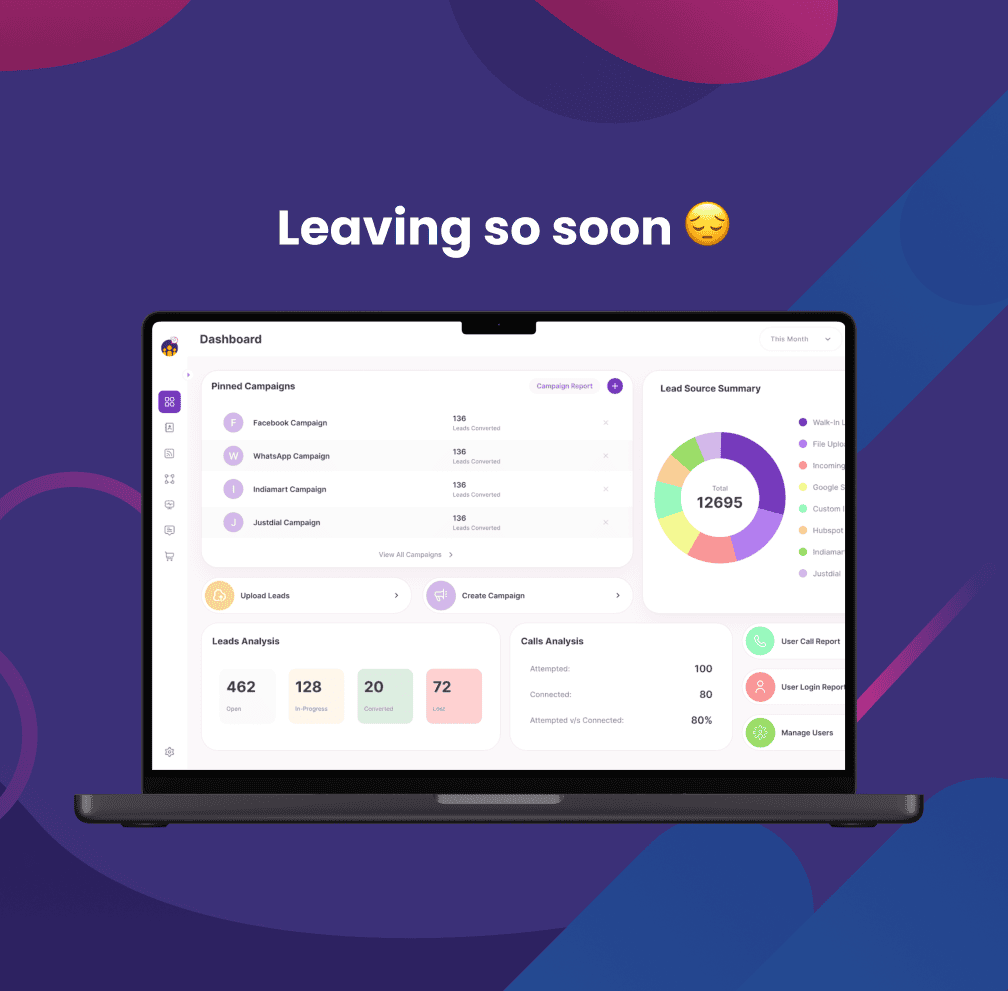





The real estate market is more competitive than ever, and buyers expect quick responses, accurate information, and smooth communication at every stage. If your sales process feels slow or unorganized, a real estate CRM can completely transform the way you work. This powerful tool helps agents capture leads instantly, automate follow-ups, plan site visits, and stay on top of every inquiry. By centralizing your entire workflow, it removes delays and boosts productivity. With the right real estate CRM software, you can accelerate sales, close deals faster, and deliver a better experience to every buyer.
The Importance of Speed in Real Estate Sales
Real estate decisions happen fast. When a buyer is actively exploring properties, they expect quick responses, updated listings, and personalized communication. Even a delay of a few minutes can push them towards another agent.
Common challenges real estate teams face include:
- Too many incoming leads to track manually
- Missed follow-ups due to busy schedules
- Inefficient coordination between agents
- Lack of visibility into buyer preferences
- Difficulty organizing site visits
- Delayed communication with property seekers
A real estate CRM software overcomes these challenges with automation, lead prioritization, and smart communication. CRM software for realtors keeps your pipeline organized and captures every opportunity efficiently.
How Real Estate CRM Software Helps Accelerate Sales
A dedicated CRM does more than store contacts. It is a central platform that helps you at every stage of selling your property. It guides you from getting leads to closing deals.
Below are the most powerful ways it boosts your sales speed.
1. Capture Leads Instantly From Every Channel
Real estate businesses receive inquiries from multiple sources:
- Property listing sites
- Facebook and Instagram ads
- WhatsApp messages
- Website forms
- Offline events
- Call center agents
A real estate CRM automatically collects inquiries into one organized pipe-line, ensuring no missed calls or lost messages and faster lead management.
2. Qualify and Prioritize Leads in Minutes
Manually checking whether a lead is serious, urgent, or just exploring takes time. CRM software simplifies this with:
- Lead scoring
- Interest-based tagging
- Automatic categorization
- Smart filters
- Property requirement matching
Your agents can immediately identify high-priority buyers who are ready to take the next step. This drastically speeds up the sales process and reduces the time wasted on cold leads.
3. Automate Follow-Ups to Avoid Lost Opportunities
Many real estate deals are lost not because of price—but because of delayed follow-ups.
A CRM helps you automate:
- Follow-up reminders
- WhatsApp replies
- SMS updates
- Email alerts
- Callback scheduling
Consistent communication builds buyer trust, and an automated dialer speeds up callbacks and outreach.
4. Improve Communication With Personalized Messaging
Clients today want property suggestions, price updates, and location details quickly. A real estate CRM allows your team to send:
- Personalized messages based on preferences
- Quick replies for common questions
- Auto-suggestions of properties
- Saved templates for faster responses
This builds stronger relationships and makes buyers feel valued—speeding up their decision-making process.
5. Manage Calls Efficiently With Call Tracking Tools
Handling multiple calls manually becomes chaotic. Many CRMs include:
- Track every call automatically with call tracking.
- Make calls instantly using click-to-call features.
- Route calls to the right agent with auto-routing.
- Receive alerts for any missed calls.
- Keep all call details organized with integrated notes.
These features help track all inquiries. This allows agents to focus on closing deals. The system integrates sales management software and automated dialers smoothly.
6. Boost Sales Productivity With Mobile CRM
Real estate agents and brokers often work outside the office—on field visits, property tours, or client meetings.
A mobile CRM helps them:
- Access leads instantly
- Update notes in real time
- Schedule follow-ups
- Share property details
- Navigate to site visits
- Connect with clients anywhere
This boosts productivity and ensures no delays due to lack of system access.
7. Plan Site Visits Smoothly and Professionally
Site visits are often the turning point in closing a deal. A good CRM acts as a site visit planner, helping you:
- Schedule visits based on customer convenience
- Assign agents to visits
- Track visit outcomes
- Set reminders for post-visit follow-ups
- Share location and property details quickly
Smooth coordination leads to better customer experience and faster conversions.
8. Improve Team Collaboration and Accountability
With multiple agents handling multiple properties, clear coordination is essential. A real estate CRM ensures:
- Transparent task assignment
- Shared updates on leads
- Visibility into sales pipelines
- Activity tracking
- Team performance insights
Managers can monitor deal progress and identify bottlenecks in real time.
9. Integrate With Marketing and Sales Tools for Faster Conversions
Integrations make your CRM even more powerful. It can connect with:
- Share updates and communicate instantly via WhatsApp.
- Connect your Instagram leads directly to the CRM.
- Sync schedules and appointments with Google Calendar.
- Capture inquiries automatically from property listing portals.
- Manage calls efficiently using integrated calling apps.
- Automate outbound calls with dialer systems.
- Run campaigns and follow-ups through email marketing platforms.
This eliminates manual data entry and keeps your entire workflow smooth and efficient.
10. Analyze Sales Performance and Optimize Strategies
Real estate CRM software includes detailed reports that help you understand:
- Which ads bring the best leads
- How fast your team responds
- Conversion rates across projects
- Common lead drop-off points
- Individual agent performance
Insights like these enable you to adjust strategies and accelerate future sales even more.
Actionable Tips to Get Maximum Sales Speed With Real Estate CRM
Here’s how to make the most of your CRM:
- Set up automatic reminders for follow-ups
- Use instant WhatsApp templates
- Tag leads by project or requirement
- Sync your CRM with listing platforms
- Train agents to update the pipeline daily
- Use mobile CRM for faster updates
- Review performance reports weekly
- Automate lead distribution using rules
When your team uses the CRM consistently, you’ll see your sales cycle shrink significantly.
Conclusion
Accelerating sales in real estate is all about fast communication, smart follow-ups, and organized lead management. A real estate CRM brings all of this together in one powerful tool. It helps you stay ahead of competitors, engage buyers instantly, manage property inquiries efficiently, and close deals faster.
If you are a broker, agent, property manager, or lead a real estate team, choosing the right CRM is key. It helps you work better and earn more money.
FAQs
1. How does real estate CRM software help in closing deals faster?
It organizes leads, automates follow-ups, and enables quick responses, helping buyers move through decisions faster.
2. Can CRM manage multiple property projects?
Yes. CRMs let you categorize leads by project, location, or budget, so agents can handle multiple listings without losing track.
3. Why should realtors use CRM software?
It helps organize leads, automate tasks, and respond quickly, boosting sales and efficiency.
4. How does CRM improve follow-up efficiency in real estate?
It sends automated reminders, alerts, and messages, and integrates with a call management app to ensure no lead is missed.
5. Can real estate CRM integrate with property portals and marketing tools?
Yes. CRMs integrate with listing sites, social media, calls, and marketing tools to capture leads automatically.