



Growing businesses depend on a steady flow of new customers. But having a lot of leads is not enough—what really matters is how well you manage them. Many companies lose potential customers. Slow follow-ups, scattered team communication, and missed leads cause this to happen.
NeoDove is a best lead management system that helps businesses capture, track, and manage leads efficiently. It centralizes inquiries from multiple channels, automates follow-ups, and provides real-time insights. With NeoDove, sales teams can prioritize high-potential leads, improve conversion rates, and build stronger relationships with prospects.
What Makes a Lead Management System Essential for Growing Businesses?
As companies grow, leads start coming from many places—websites, WhatsApp, calls, ads, events, and referrals. Without a structured system, people quickly lose or delay these inquiries. A Lead Management system keeps everything organized and helps teams work faster and more efficiently.
Here’s how it supports scalable growth:
- Improves overall conversion rate
- Increases business revenue
- Tracks every lead in one central place
- Ensures consistent and timely follow-ups
- Works well with existing CRM systems
- Captures leads from all channels to collect leads effectively
- Helps categorize and source prospects for better lead sourcing
- Sorts leads based on lead qualification and interest
- Assigns leads to the right team instantly to automatically assign leads
- Provides real-time reports and insights
- Integrates smoothly with ERP systems
- Connects with sales CRM software applications
- Strengthens lead nurturing efforts
- Highlights important key performance indicators
Together, these features create a dependable and professional sales process that helps businesses grow smoothly and confidently.
How Lead Management System Improves the Entire Lead Process
A Lead Management System simplifies the journey from initial inquiry to a paying customer. Key benefits include:
1. Capture Leads from All Channels
Automatically collect leads from website forms, ads, calls, social media, WhatsApp, or offline events. This eliminates manual data entry and ensures that we miss no opportunities.
2. Instant Lead Assignment
Leads are sent right away to the correct team member. This is based on rules like product, location, or availability. This helps get faster responses and higher conversions. Systems that automatically assign leads reduce delays and improve team productivity.
3. Lead Prioritization
Score and categorize leads based on interest and engagement. Focus on high-potential opportunities while tracking those that need nurturing. Effective lead qualification ensures teams spend time on the right prospects.
4. Follow-Up Management
Set reminders, track communication history, and automate notifications so your team never misses a follow-up. Consistent engagement increases customer satisfaction and conversion potential. Smart follow-ups strengthen lead nurturing.
5. Centralized Tracking and Transparency
Maintain all interactions, notes, and tasks in one platform. Managers gain clear visibility of team performance and can easily reassign leads when needed. Integration with CRM systems and sales CRM software ensures smooth operations.
6. Real-Time Reporting and Insights
Monitor which sources generate quality leads, track conversion stages, and evaluate team effectiveness. Real-time reports act as important Key Performance Indicators to guide business strategy and improve outcomes.
7. Lead Nurturing
Engage leads over time with personalized messages, relevant content, and timely updates. Effective lead nurturing strengthens relationships and increases chances of closing deals, ultimately boosting revenue.
How to Choose the Best Lead Management System
With many options in the market, picking the best one can be confusing. Here are the features you should prioritize:
Step 1: Simple and Clean Interface
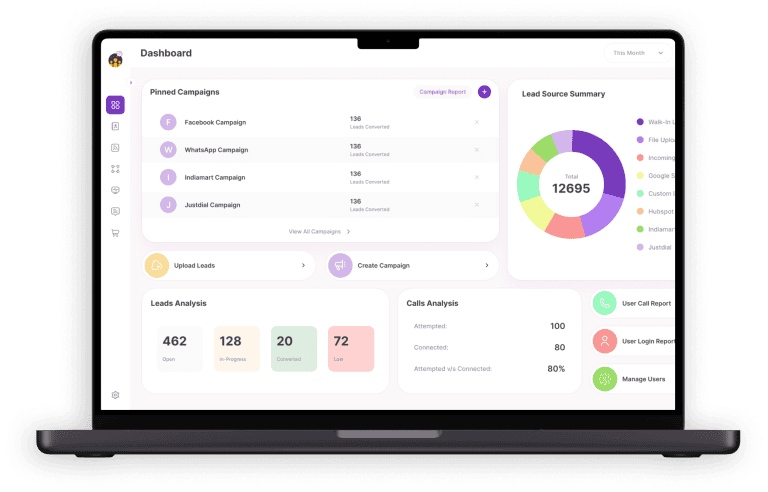
Your sales team should quickly understand how to use the system without confusion or long training sessions. A friendly dashboard improves adoption and daily usage.
Step 2: Support for Multi-Channel Lead Capture
Your system should easily bring leads from:
- Ads
- Phone calls
- Social platforms
- Website forms
This ensures all your lead sources are covered and makes it easy to collect leads efficiently.
Step 3: Strong Automation Features
Automation helps save hours every day. Look for the ability to:
- Automatically assign leads
- Set auto reminders for follow-ups
- Create daily tasks
- Set recurring follow-ups
These features add consistency to your sales process and enhance lead nurturing.
Step 4: Customizable Pipeline and Stages
Every business uses a different sales journey. You should be able to:
- Add custom steps
- Adjust lead stages
- Rename pipelines
- Create your own tags
This flexibility helps you match lead qualification and workflow needs.
Step 5: Detailed Reporting and Insights
Reports help you understand:
- Conversion rate
- Team performance
- Lead movement
- Daily progress
Choose a system that offers real-time reports and easy-to-read data to track Key Performance Indicators.
Step 6: Integration Capabilities
Your Lead Management system should work well with NeoDove CRM, telecalling tools, ERP platforms, and messaging tools. This will create a complete workflow.
Step 7: Strong Support and Scalability
As your business expands, your platform should easily grow with you. Pick a provider that has good customer support and reliable performance. This will help your sales CRM software run smoothly.
Conclusion
A NeoDove’s Lead Management system is one of the most valuable tools for any growing business. It helps you organize incoming inquiries, speed up responses, improve follow-ups, and build smarter workflows. Businesses can improve their chances of turning leads into customers. They can do this by using strong tracking and gaining better insights. Additionally, easy integration with CRM systems and sales software helps them grow consistently.
The right system ensures your team works smarter—not harder—while offering customers a smooth and professional experience. To achieve more conversions, clarity, and control, investing in a strong Lead Management system is the right move.
FAQ’s
1. What are the advantages of the best Lead Management system?
The best Lead Management system organizes all incoming leads, automates follow-ups, and ensures timely responses. It improves conversion rate, streamlines workflows, and helps sales teams focus on high-potential opportunities.
2. What factors should I look for in a Lead Management system?
Look for multi-channel lead capture, automation for assignments and follow-ups, customizable sales pipelines, clear reporting and analytics, integration with CRM systems/ERP, and scalability to support business growth.
3. Why do growing businesses need a Lead Management System?
As your inquiries increase, manual tracking becomes messy. A system ensures every lead is handled on time, organized properly, and converted efficiently.
4. How does a Lead Management system help with lead nurturing?
It automates reminders, tracks interactions, and allows personalized communication, ensuring prospects remain engaged and are guided through the sales process until they are ready to convert. Effective lead nurturing improves revenue.
5. Can a Lead Management system improve team productivity?
Yes. By centralizing leads, automating routine tasks, and providing real-time reports and performance insights, it allows sales teams to work more efficiently, focus on high-value activities, and achieve better results using sales CRM software.