


Handling customer calls becomes challenging as businesses grow. Without the right system, teams often deal with delays, misrouted calls, and missed opportunities. This is where Interactive voice responses and call routing help streamline communication.
Although they are often used together, Interactive voice responses and call routing are not the same. Knowing how each works allows businesses to design a smarter call routing system that improves call flow, reduces confusion, and ensures better handling of inbound and outbound calls.
What is IVR (Interactive Voice Response)?
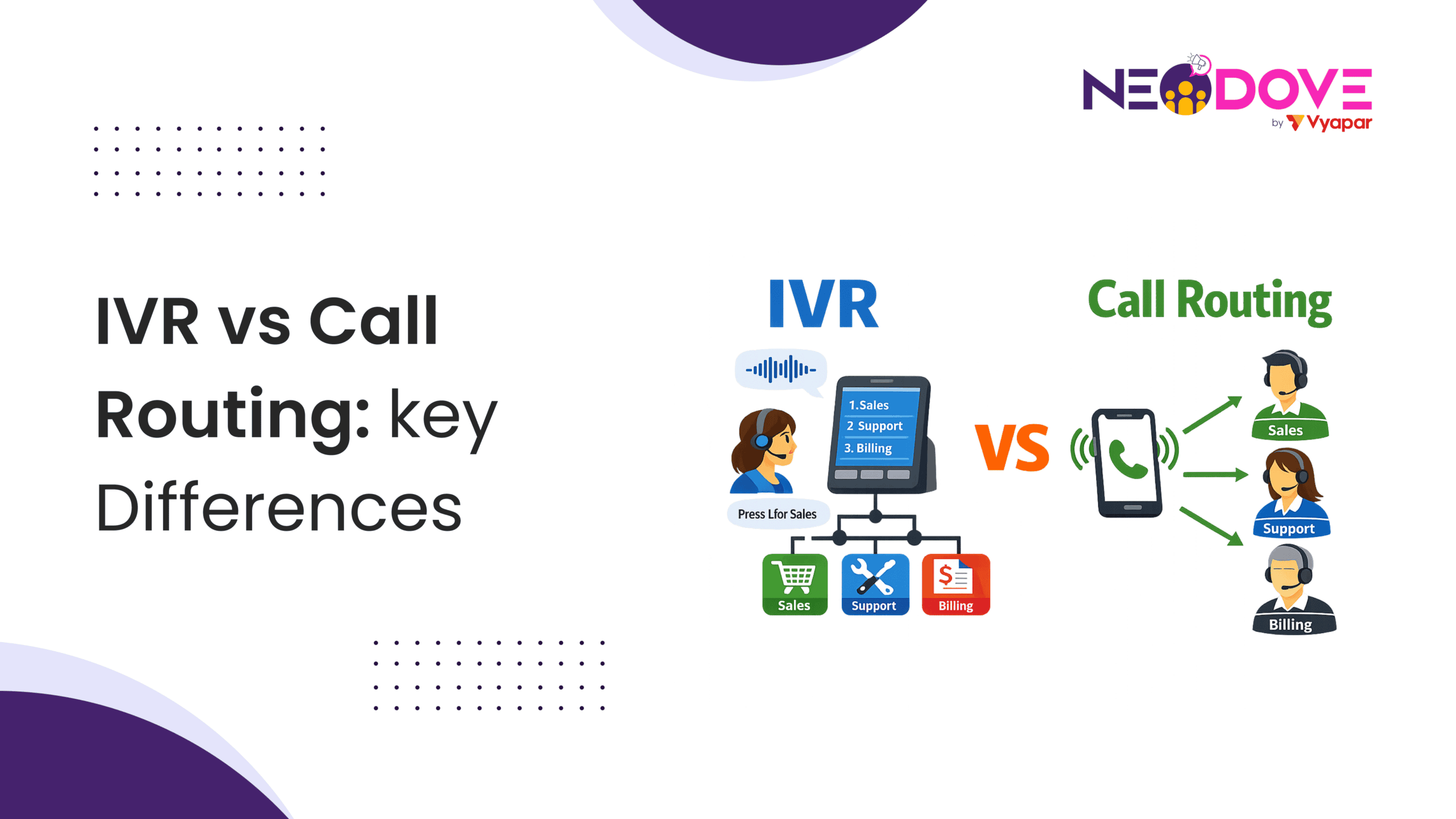
Interactive voice response is a technology that allows callers to interact with a system through voice prompts or keypad inputs. It acts as the first touchpoint, helping businesses collect basic information before moving the call forward.
- Widely used in an ivr in call center to organize incoming queries
- Helps callers navigate options without waiting for agents
- Works with call tracking to capture interaction data
- Enhances efficiency through a structured IVR System
What is Call Routing?
Call routing is the process of directing calls to the most suitable agent or department based on specific conditions. It ensures that calls are handled by the right person without unnecessary transfers.
- Uses automatic call distribution to assign calls intelligently
- Operates through a call routing system for smooth call flow
- Minimizes wait time and improves response accuracy
- Supports detailed insights with call tracking
IVR vs Call Routing: Key Differences
| Feature | Interactive voice responses (IVR) | call routing |
| Core Function | Engages callers with menu options | Assigns calls to agents |
| Stage in Call Flow | Initial interaction layer | Post-selection routing layer |
| Dependency | Works independently as a front layer | Depends on input or predefined rules |
| User Role | Caller actively participates | System automatically assigns calls |
| Technology | IVR System | call routing system |
| Efficiency Impact | Reduces unnecessary agent involvement | Reduces call handling time |
| Application | Common in ivr in call center setups | Used across support and sales operations |
| Logic Used | Menu-based navigation | automatic call distribution logic |
How IVR and Call Routing Work Together for Business Growth
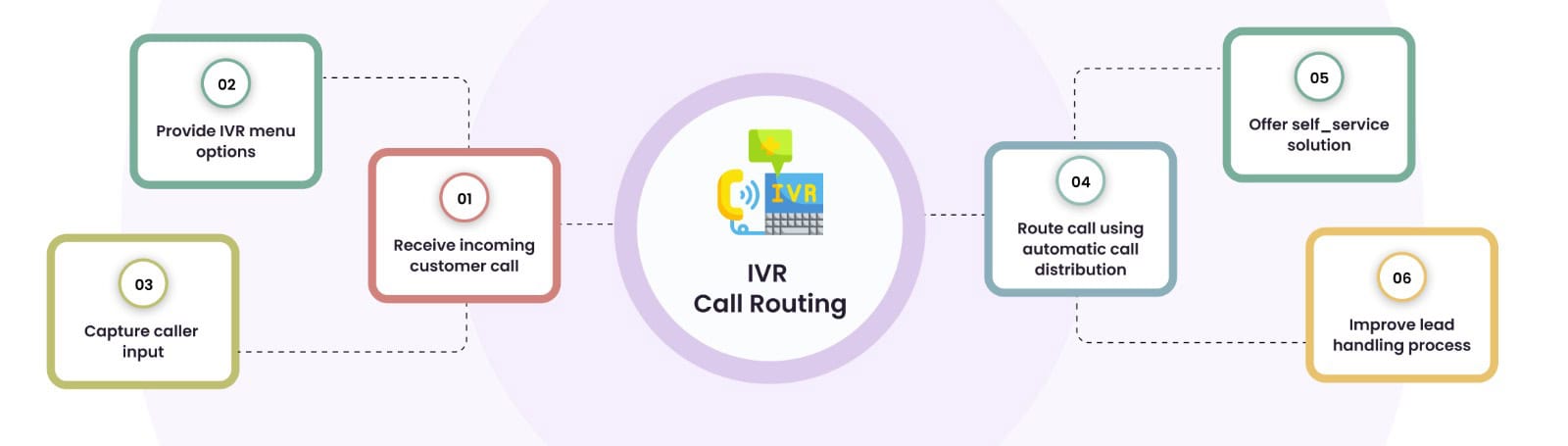
Businesses achieve better results when Interactive voice responses and call routing are combined into a single workflow. Instead of handling calls randomly, this approach creates a guided path for every customer interaction.
Process Flow
- A call is received from a customer
- Interactive voice responses presents relevant options
- Caller selects their requirement
- The call management app routes the call using automatic call distribution
This structured journey ensures that only relevant calls reach agents, saving time and improving response quality.
Business Impact
- Reduces unnecessary call transfers
- Improves lead handling efficiency
- Supports better decision-making through call tracking
- Optimizes management of inbound and outbound calls
Tools like NeoDove help businesses implement this system in a simple and scalable way.
Benefits of IVR and Call Routing
Using both Interactive voice responses and call routing provides long-term advantages beyond just handling calls.
- Creates a structured system for managing customer interactions
- Improves first-call resolution by connecting users accurately
- Reduces dependency on manual call handling
- Uses automatic call distribution to balance workload across teams
- Provides actionable insights with call tracking
- Strengthens operations in an ivr in call center environment
Real-World Use Cases
The real value of Interactive voice responses and call routing becomes clear when applied to practical business scenarios.
- Retail & E-commerce: Handles delivery queries via IVR; complex issues are routed through a call routing system.
- Healthcare: Directs patient calls based on urgency using automatic call distribution.
- Financial Services: Handles secure customer interactions through an IVR System before routing.
- Service-Based Businesses: Manages large volumes of inbound and outbound calls efficiently.
Conclusion
Understanding the difference between Interactive voice responses and call routing is key to building an effective communication system. While Interactive voice responses focuses on guiding callers, call routing ensures those calls are handled by the right people.
When used together, they create a streamlined process that reduces delays, improves efficiency, and enhances customer experience. Platforms like NeoDove make it easier for businesses to implement and scale this system without complexity.
FAQs
1. Are IVR and call routing the same?
No, IVR and call routing are different systems with separate roles. IVR interacts with callers through voice menus, while call routing directs the call to the right agent or department based on rules.
2. Where is IVR mainly used?
IVR is mainly used in call centers to manage high volumes of incoming calls. It helps guide customers to the correct department and provides quick responses to common queries.
3. What makes a call routing system effective?
An effective call routing system uses automatic call distribution and real-time data. This ensures calls are assigned to the most suitable agent quickly and efficiently.
4. How does call tracking improve operations?
Call tracking provides insights into call performance and customer interactions. It helps businesses identify gaps, improve agent performance, and optimize call strategies.
5. Can businesses handle both inbound and outbound calls efficiently?
Yes, with the right tools and setup, businesses can manage both inbound and outbound calls smoothly. This improves workflow, reduces delays, and enhances overall communication.