



Introduction: Expanding Customer Reach Through Strategic Communication
In the contemporary business landscape, small enterprises in India encounter increasing competition. To achieve sustainable growth, maintaining direct communication with customers is essential. One of the most effective channels for such engagement is through telephone outreach, commonly referred to as “telecalling.”
However, traditional cold-calling methods are no longer effective. Today’s business environment requires intelligent systems that facilitate timely and targeted communication. This is where Telecalling CRM proves invaluable. An efficient Telecalling CRM enables businesses to monitor calls, manage follow-ups, and enhance customer satisfaction.
No matter if you have an online saree shop in Surat or deliver groceries in Mumbai, this guide is for you. Telecalling CRM will show how it can make your job easier in 2025.
What Is a Telecalling CRM?
Telecalling CRM refers to a call management solution tailored for customer engagement via voice communication. The acronym “CRM” stands for Customer Relationship Management. This system facilitates tracking communication history, customer interactions, and necessary follow-up activities.
A telecalling CRM is designed to make voice calls. This is different from traditional CRMs that only track emails and tasks. Its core capabilities include:
- Automatic sequential dialing of contact lists
- Displaying caller information in advance
- Recording customer interactions and remarks
- Facilitating follow-up via email, WhatsApp, or SMS
- Monitoring call activity across teams
In essence, it functions as an intelligent assistant for all telephonic engagements.
Why Indian Small Businesses Prefer Telecalling CRM
Small businesses often operate with limited budgets, where large advertising campaigns or celebrity endorsements are not feasible. A well-executed telephone call can assist in driving sales, resolving customer queries, and building long-term relationships.
Telecalling CRM provides the following benefits:
- Enables outreach to a large audience efficiently
- Facilitates interactions in regional languages
- Automates timely follow-ups with potential customers
- Streamlines lead tracking and organization
- Reduces errors and enhances consistency during calls
Case Example: A store in Pune that sells electronics started using NeoDove, a Telecalling CRM. They saw quicker follow-ups and better call tracking. Within one month, they observed a 30% increase in sales.
Top 10 Features Essential for a Telecalling CRM in 2025
1. Intelligent Auto Dialer
The CRM system automatically dials numbers from your lead list. It starts the next call right after the last one ends. This improves efficiency and increases outreach potential.
2. Simplified Lead Management
The CRM provides:
- Caller information prior to engagement
- Comprehensive note-taking tools
- Follow-up reminders
It Groups leads based on their interest levels:
- Cold leads – no expressed interest
- Warm leads – requires nurturing
- Hot leads – ready for conversion
This enhances workflow clarity and ranking.
3. Real-Time Call Analysis and Performance Reports
Supervisors can view live call metrics, including:
- Average call durations
- Performance statistics for team members
- Conversion performance
- Ineffective lead patterns
These analytics support data-driven decision-making on a daily basis.
4. Personalized Call Scripts
The CRM displays:
- Customer names
- Historical interaction data
- Preferred communication language
This empowers telecallers to communicate confidently and build rapport more effectively.
5. Call Recording and Evaluation
Calls can be recorded with customer consent and stored securely. Key advantages include:
- Effective training for new employees
- Identification of actionable improvements
- Ongoing quality assurance
6. One-Click Call Disposition
Upon concluding a conversation, users can swiftly mark the outcome by selecting options such as:
- Interested – schedule follow-up
- Not interested
- WhatsApp response sent
- Incorrect number
This enhances speed and updates the system in real time.
7. Omnichannel Communication Capabilities
A modern CRM enables communication across multiple platforms, including post-call engagements via:
- SMS for unanswered calls
- Email delivery for invoices
- WhatsApp offers for warm prospects
This improves reach and customer engagement.
8. Optimized Call Timing and Scheduling
CRM analytics indicate peak times for successful calls (e.g., 10:30 AM–1 PM or 4 PM–6 PM). Scheduled follow-ups ensure:
- Timely re-engagement
- Respect for recipients’ availability
- Adherence to business-hour policies
9. Local Number Masking
Call recipients tend to answer when the number appears local. CRMs can simulate a local caller ID, increasing pick-up rates across geographic areas.
10. Team Management and Monitoring Tools
For businesses with small teams, CRM supports:
- Lead distribution among employees
- Performance tracking
- Target setting and incentive assignment
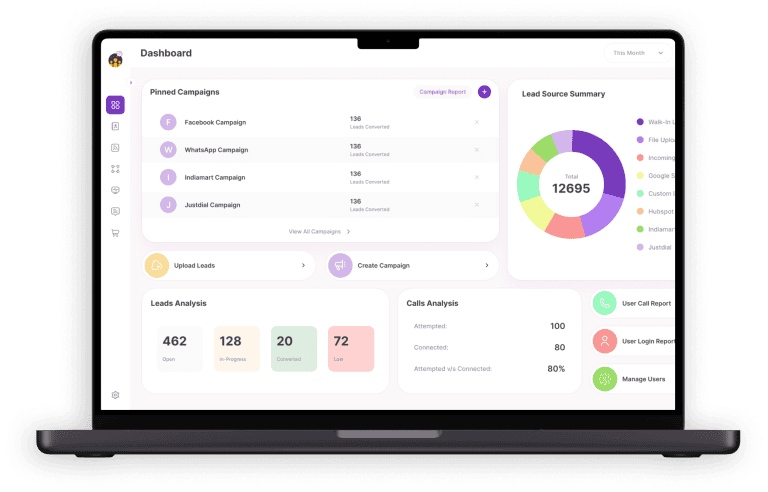
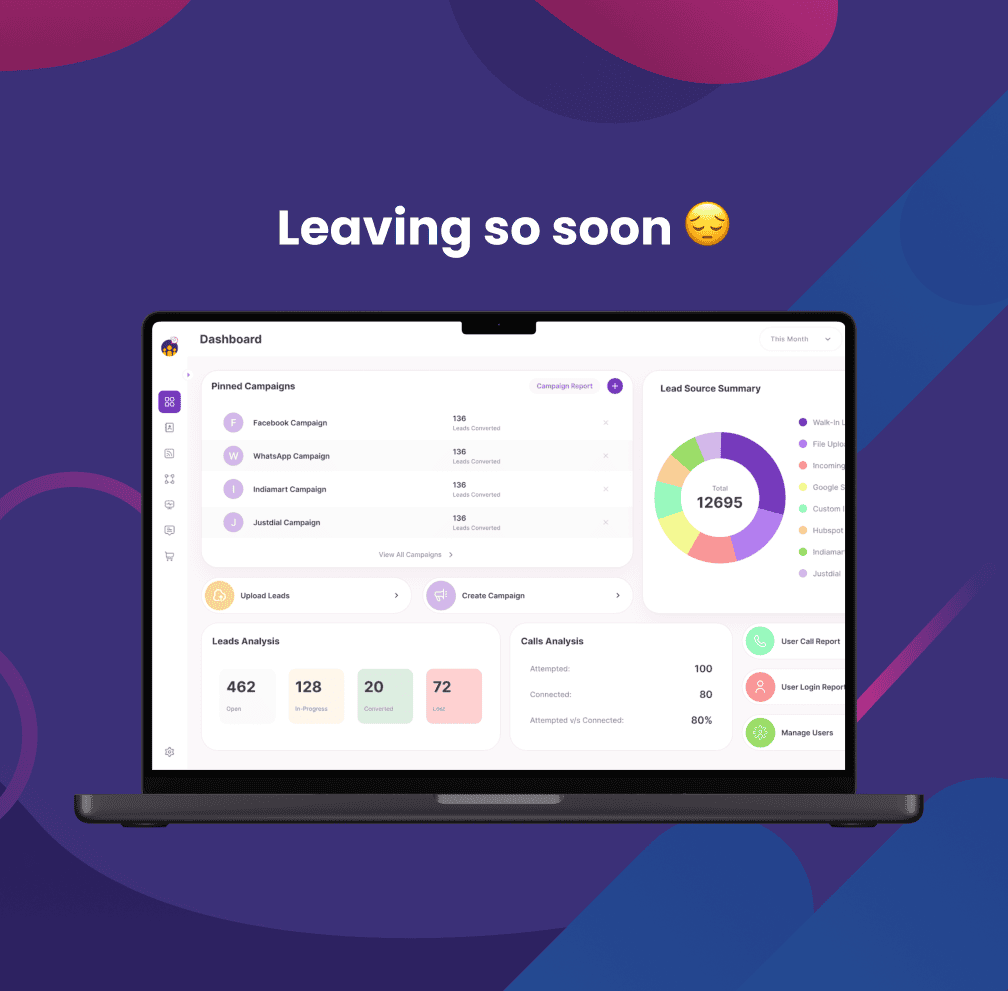
Dashboards offer a comprehensive overview of staff productivity.
Applications of Telecalling CRM in Business Processes
1. Lead Generation
Telecalling campaigns can efficiently connect with individuals who submitted inquiries via websites or social media. CRM enables timely, structured lead engagement.
2. Nurturing Potential Clients
Some prospects take time to make decisions. CRM-driven reminders ensure timely follow-ups, thereby improving conversion chances.
3. Payment and EMI Follow-Up
Organizations offering financing packages can deliver payment reminders through calls or automated WhatsApp messages using the CRM system.
4. Customer Support and Service
Prompt phone support builds customer trust. The CRM stores service requests and progress notes, enabling timely resolution.
5. Feedback Collection
Post-transaction, businesses can inquire:
“How would you rate your experience on a scale of 1 to 5?”
CRM tools record these responses for future assessment and improvement.
Practical Telecalling Workflow with CRM
Phase 1: Campaign Initiation
- Define objectives: sales, service, or feedback
- Segment the audience by location or demographic
Phase 2: Preparation
- Develop a concise, courteous call script
- Assign leads to agents based on language and region
Phase 3: Execution
- CRM auto-dials each contact
- Caller preview includes customer data
Phase 4: Active Conversation
- Maintain clear communication and assess interest
- Select a predefined call outcome
Phase 5: Post-Call Actions
- If missed → send WhatsApp/SMS in 2 minutes
- If successful → issue invoice or receipt
- If disinterested → update lead status
Phase 6: Reporting & Optimization
- Examine dashboards daily
- Identify successful tactics and modify strategy as needed
Addressing Common Challenges Through CRM
- Low Answer Rates: Employ local number masking and pre-call SMS notifications.
- Missed Follow-Ups: Utilize reminder functionalities and one-click scheduling tools.
- Ineffective Scripts: Incorporate regional languages and CRM tags for personalization.
- Team Accountability Issues: Leverage CRM’s centralized platform, ensuring information parity across all users.
Business Impact: Real-World Success Cases
1. Fintech Company in Chennai
- Post-signup disengagement: Lead changing category and re-sharing via CRM. The conversion rate improved from 12% to 32% within three months.
2. Textile Manufacturer in Surat
- Communication gap with clients in northern regions: CRM assigned representatives based on linguistic and gender alignment. Outcome: 11 new B2B clients acquired in a single month.
3. Ayurvedic Retailer in Amritsar
- Customers failed to reorder: CRM set proactive follow-up reminders. Outcome: 2.4x increase in return orders.
Strategic Best Practices: 10 CRM Telecalling Tips for 2025
- Initiate calls using the customer’s preferred language.
- Review CRM tags prior to engagement for better preparation.
- Convey your purpose succinctly—ideally within 12 seconds.
- Attempt contact with each cold lead at least twice before disengaging.
- Respect religious observances and meal times to improve answer rates.
- Always return missed calls with a WhatsApp message or SMS.
- Request one focused feedback question per interaction.
- Record calls (with permission) to identify successful strategies.
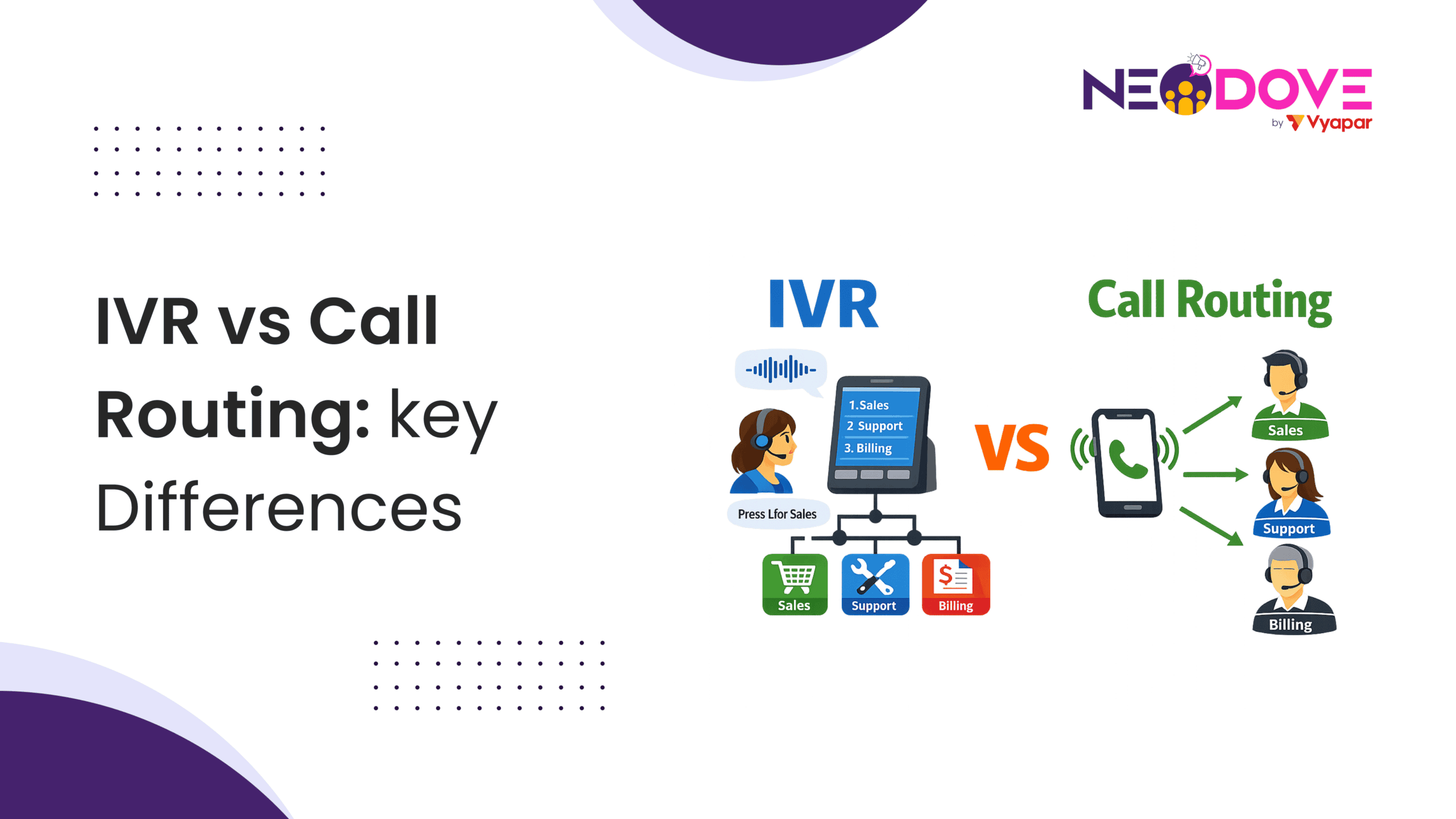
- Integrate IVR solutions to manage standard service inquiries.
- Repeatedly refine call scripts based on listener responses and CRM insights.
Conclusion: Why Telecalling CRM Is a Timely Investment for 2025
Voice communication is still one of the best ways to connect with customers. This is true even with the rapid growth of digital marketing. However, effectiveness derives not from volume but from strategic execution. Telecalling CRM equips small businesses with enterprise-level communication capabilities—without substantial investment.
Regional businesses, e-commerce ventures, and new startups in India can benefit from using Telecalling CRM in 2025. This can lead to growth, better customer retention, and improved efficiency.
Now is the opportune moment to enhance your telephonic outreach with intelligent CRM tools.