


















Valid till
Hrs
Mins
Secs
Valid till
Hrs
Mins
Secs

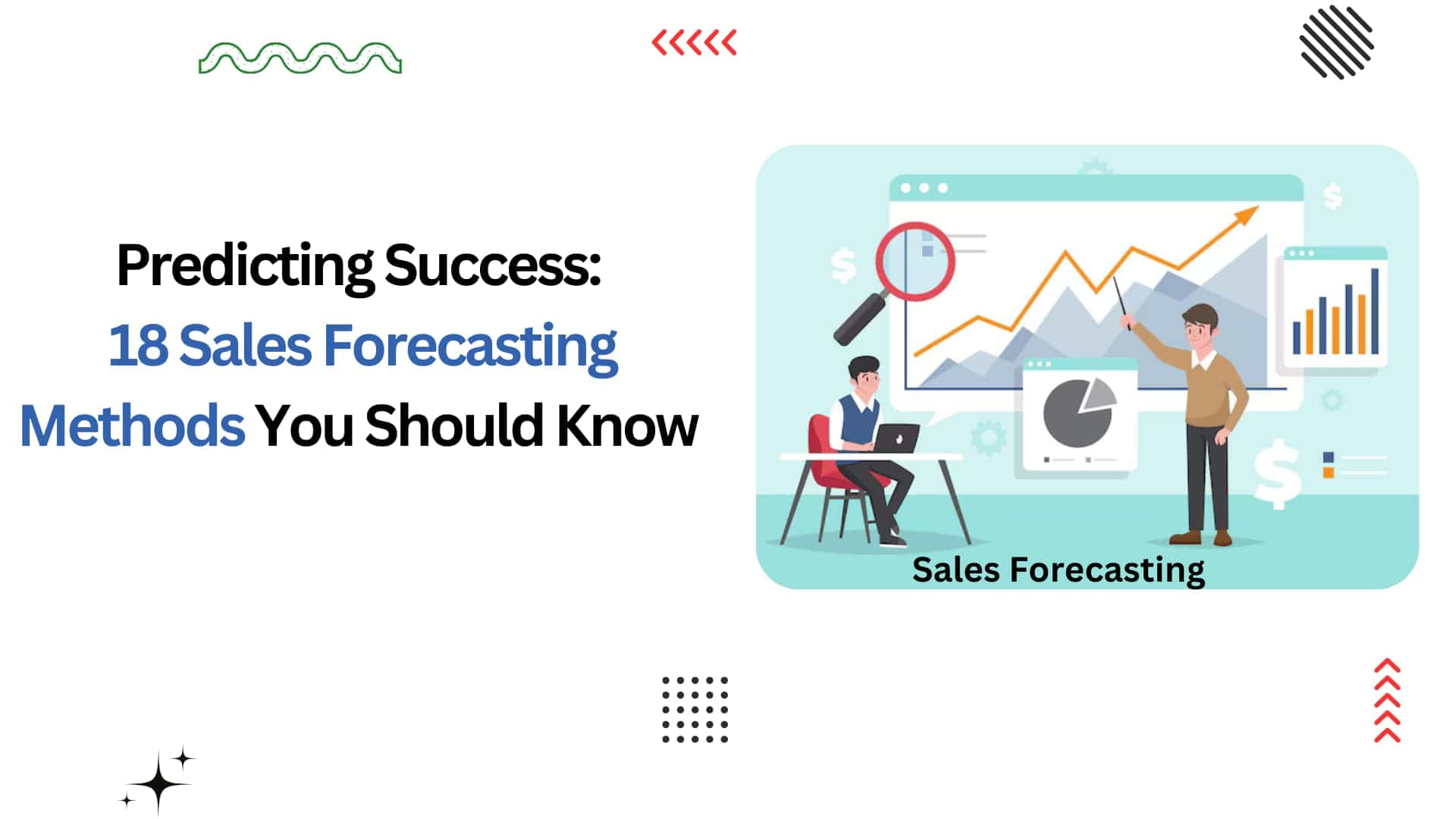
Predicting Success: 18 Sales Forecasting Methods You Should Know

Do you know what sales forecasting is? Sales forecasting is fundamental to shaping any business strategy. It helps businesses anticipate future sales, allocate resources, manage budgets, and set achievable goals. 

Accurate forecasting ensures you avoid overstocking, minimize resource wastage, and prevent underfunding. With various methods available, businesses can customize their approach to align with specific market dynamics and their requirements. 

In this blog, we’ll explore 18 reliable sales forecasting methods, breaking down how each method operates, when to use them, and why they are crucial for developing a robust sales strategy. 

These sales forecasting techniques offer valuable understandings of sales trends, customer behavior, as well as potential revenue projections.

1) Historical Data Analysis

This is one of the sales forecasting methods that makes use of past sales data analytics to find out the future trends. It’s a straightforward and reliable method, assuming that previous sales patterns will likely repeat under similar conditions. 

  • Best for Companies in stable markets or with consistent sales performance.
  • Why it works: It eliminates speculation by using a proven foundation for planning future sales.

2) Market Research

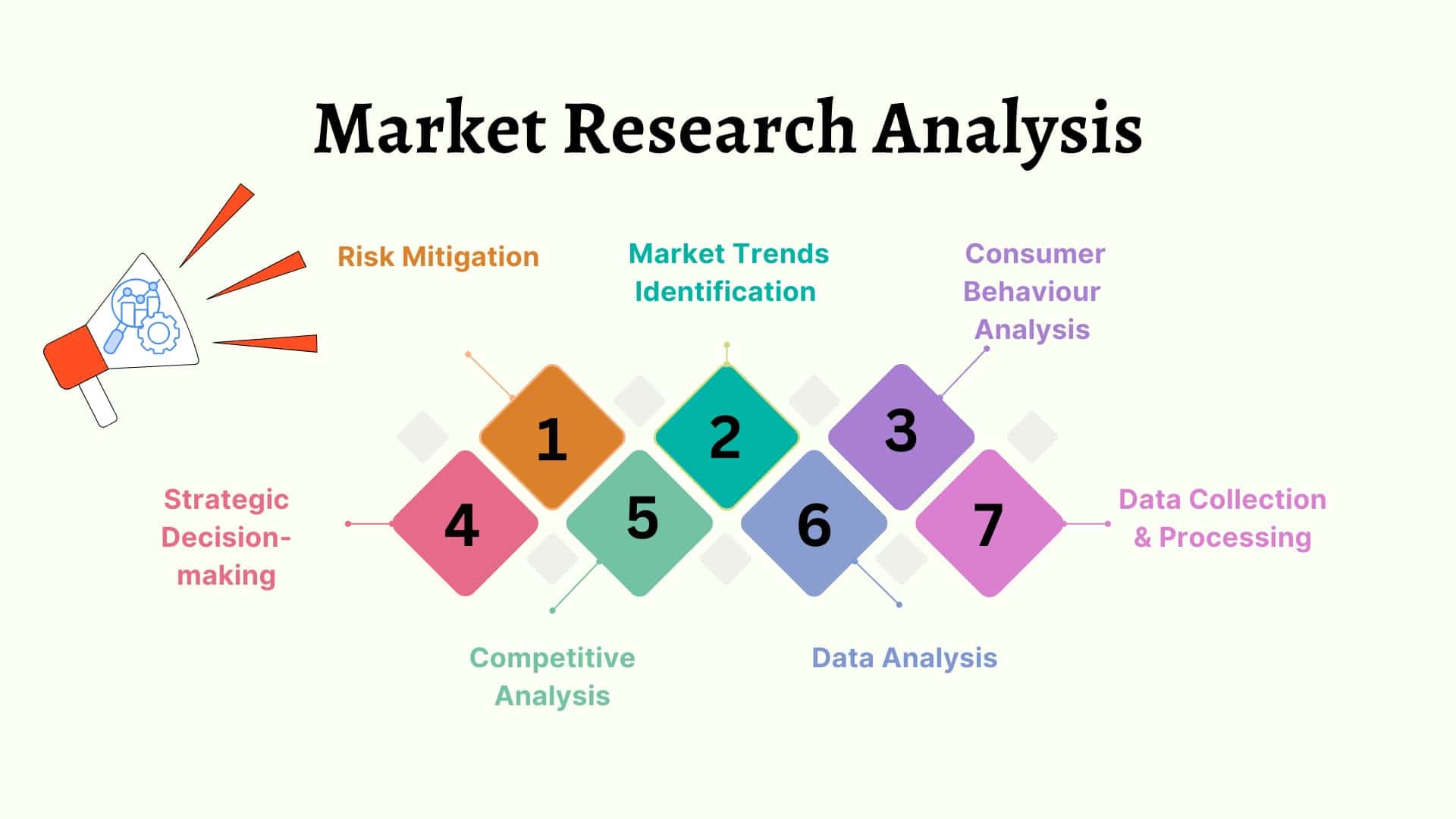
Through surveys, polls, and analysis of market trends, this qualitative technique helps businesses gain insights into consumer preferences and identify growth opportunities.

  • Best for new product launches or markets where consumer behaviors change frequently.
  • Why it works: It provides data-driven insights from real customers, reducing risks associated with assumptions.

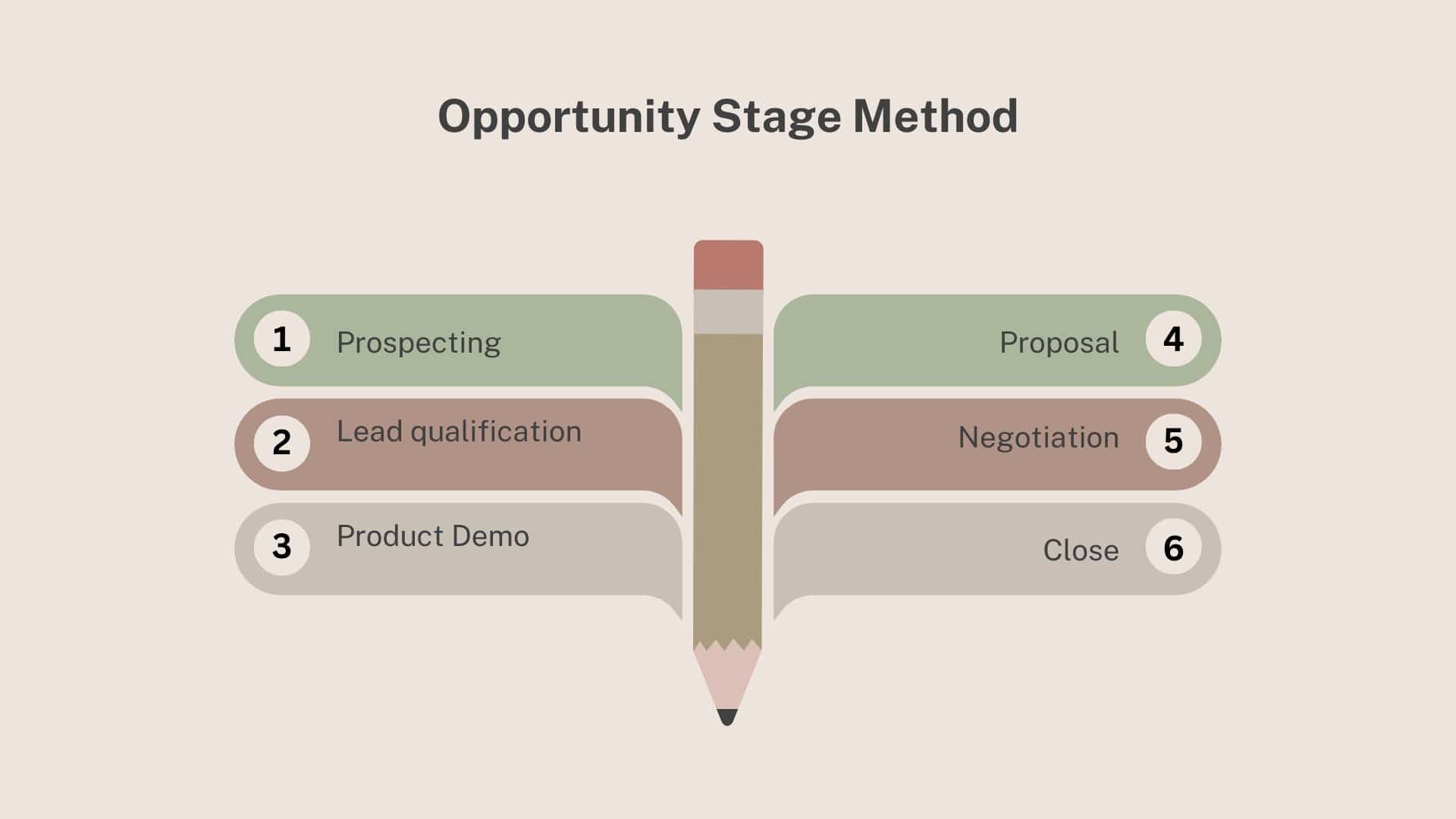
3) Opportunity Stage Method

This method involves tracking leads as they progress through different stages of the sales pipeline, from initial interest to negotiation.

  • Best for Businesses with structured pipelines and longer sales cycles.
  • Why it works: It offers a detailed view of future sales prospects based on the progression of leads.

4) Sales Team Input

Here, the sales team provides direct input based on their knowledge of deals in the pipeline. Sales reps often offer valuable insights as they have a strong understanding of ongoing deals. 

  • Best for companies with experienced sales teams.
  • Why it works: It incorporates real-world insights, offering forecasts rooted in actual market conditions.

5) Moving Average

This method smooths out sales data fluctuations by averaging over a specific period, helping identify trends in industries with inconsistent sales cycles.

  • Best for businesses that experience seasonal demand or cyclical trends.
  • Why it works: It eliminates short-term volatility to reveal underlying sales patterns.

6) Regression Analysis

A statistical approach that identifies relationships between variables (like pricing and promotions) and sales outcomes. This helps forecast future results based on known factors.

  • Best for data-driven companies that analyze multiple variables such as price, marketing, and market trends.
  • Why it works: By understanding the cause-and-effect relationships, businesses can adjust strategies and see a direct impact on sales.

7) Cohort Analysis

Cohort analysis groups customers based on shared characteristics (like demographics or purchase history) and tracks their behavior over time, making it ideal for measuring customer loyalty and retention.

  • Best for subscription-based models or businesses with a strong customer retention focus.
  • Why it works: It offers an in-depth understanding of customer behavior and loyalty patterns.

8) Expert Judgment

For businesses with limited historical data, expert judgment relies on the experience of industry professionals to forecast sales.

  • Best for startups or industries with little historical sales data.
  • Why it works: It leverages the intuition and expertise of seasoned professionals to predict future market trends.

9) Customer Intent Data

By analyzing customer actions such as online searches and content engagement, businesses can gauge interest and forecast upcoming sales.

  • Best for e-commerce businesses and those with significant digital footprints.
  • Why it works: Real-time behavioral data helps predict customer purchases, giving businesses an edge in planning.
Trusted by 40,000+ Users
Struggling to manage your leads? 🤔
Put an end to old-fashioned lead management and get started with smarter lead management today!
Blog - CTA l Request Demo l April 2024

10) Seasonality Analysis

This method analyzes how specific products perform during certain times of the year, factoring in cyclical demand.

  • Best for retail businesses with seasonal demand fluctuations.
  • Why it works: It helps businesses plan for peak sales periods, preventing inventory issues.

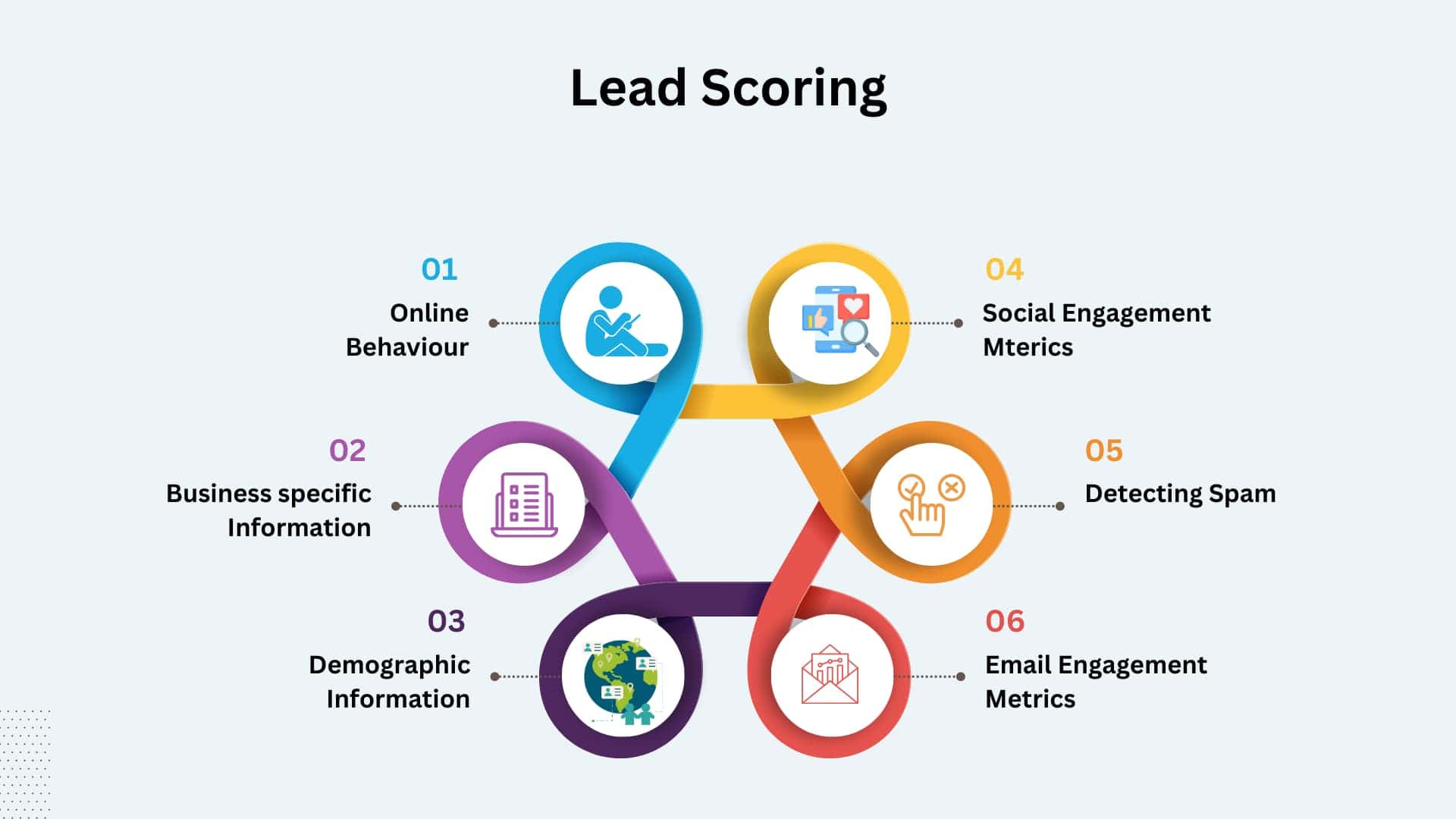
11) Lead Scoring

Lead scoring evaluates potential customers using factors such as their behavior and level of engagement. Higher scores indicate higher conversion potential, improving forecasting accuracy.

  • Best for B2B businesses with longer, more complex sales cycles.
  • Why it works: It allows companies to focus efforts on leads with the highest likelihood of conversion.

12) Bottom-Up Forecasting

This technique builds forecasts from the ground up, starting with individual sales reps’ predictions and scaling up to an overall forecast.

  • Best for companies with strong, localized sales teams.
  • Why it works: It offers a detailed, real-time view of the sales landscape directly from the salesforce.

13) Top-Down Forecasting

Unlike the bottom-up approach, this method begins with overall business goals and works backward to assign sales targets across teams or regions.

  • Best for large companies with enterprising growth goals.
  • Why it works: It ensures alignment between sales efforts and broader business objectives.

14) Delphi Method

The Delphi Method consists of collecting opinions from a group of experts who share their predictions. These predictions are refined over several rounds of feedback, allowing for a consensus-based, more accurate projection.

  • Best for industries with complex variables affecting sales.
  • Why it works: It ensures forecasts are fine-tuned through expert feedback, resulting in more balanced and practical predictions.

15) Participation-Weighted Forecasting

This method draws on input from different departments, such as sales, marketing, and finance, to generate a comprehensive forecast. Each department’s contribution is weighted according to its influence on overall sales outcomes.

  • Best for teams with multiple departments contributing to sales performance.
  • Why it works: By integrating insights from different functions, it creates a forecast that considers various sales drivers.

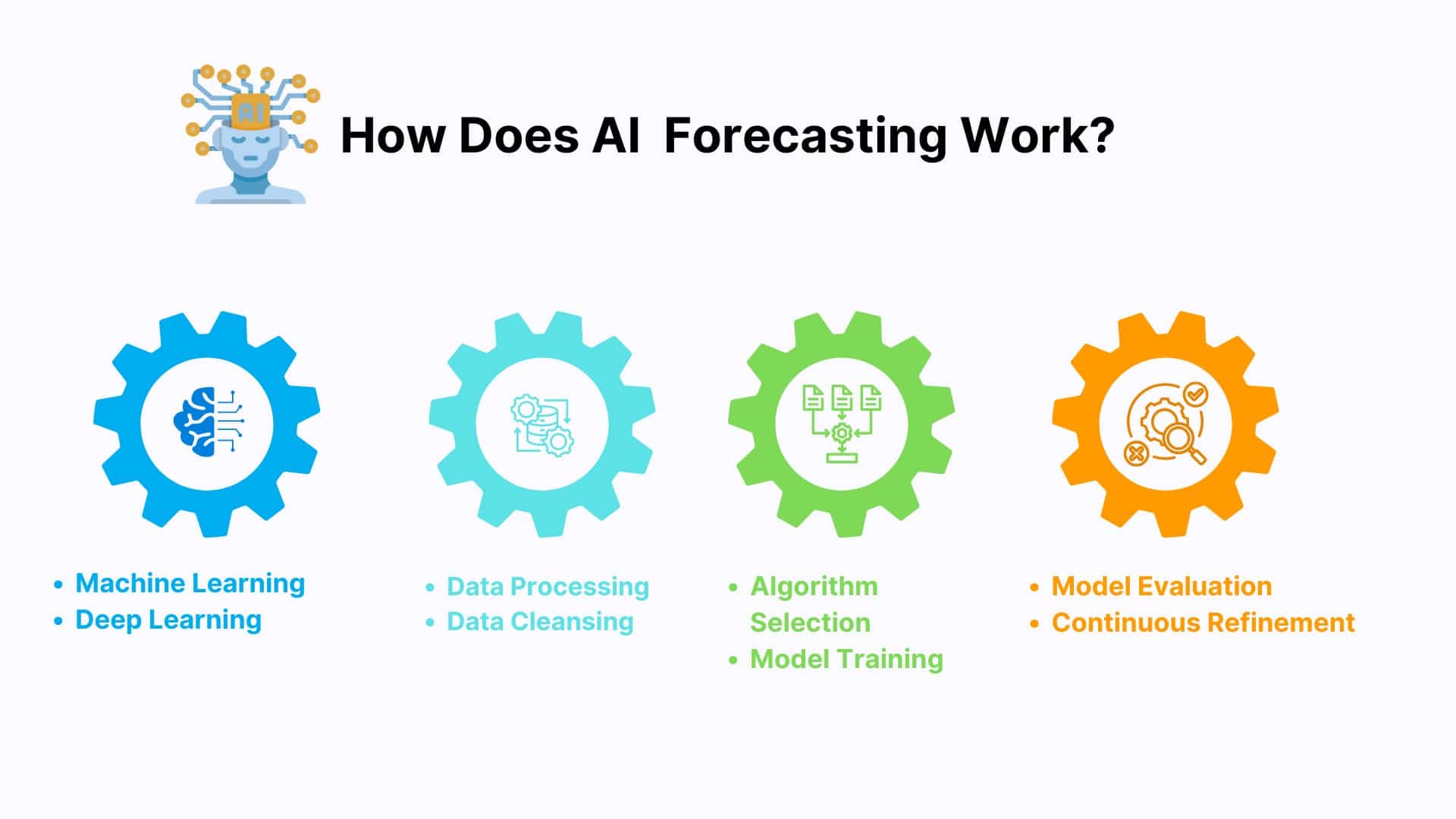
16) AI and Machine Learning

By utilizing AI-driven tools, this approach examines extensive datasets to forecast upcoming sales trends. Machine learning algorithms adaptively learn from past data, enhancing the precision of sales predictions over time. 

  • Ideal for companies that can take advantage of cutting-edge technology and substantial datasets.
  • Why it works: AI uncovers patterns and trends that human analysis might miss, offering precise forecasts by processing vast amounts of data.

17) Scenario Planning

In this approach, businesses plan for multiple potential sales outcomes—best-case, worst-case, and most likely scenarios—enabling them to prepare for different market conditions and manage risk effectively.

  • Best for industries dealing with uncertain or volatile markets.
  • Why it works: It allows businesses to plan for a range of possibilities, ensuring they’re equipped to adapt to varying conditions.

18) Discounted Cash Flow

This financial forecasting technique evaluates future sales by estimating cash flow and discounting it to the present value. It allows businesses to concentrate on sustainable profitability and strategic investment planning.

  • Best for organizations prioritizing long-term growth and financial planning.
  • Why it works: It provides a long-term perspective on sales and revenue, helping businesses make informed investment and valuation decisions.
Take your telecalling team to the next level
Empower your telecallers with NeoDove, download our handy guide today!

    Blog - CTA l Telecalling Team l May 2024

    Conclusion

    Sales forecasting is not just about predicting numbers but also preparing for future success. Each forecasting method offers unique benefits and is applicable in different contexts. 

    The challenge lies in selecting the right method—or combination of methods—that suits your business’s needs. 

    Regardless of whether you favor qualitative methods such as market research or quantitative strategies like AI forecasting, the primary objective remains accurate prediction and effective planning.  

    By honing these forecasting methods, you can improve resource management, enhance sales strategies, and drive business growth.

    Ready to Transform Your Telecalling Operations?

    Request Demo l Case Study Page Form l December 2024

    By submitting this form, I give my consent to receive message/email/whatsapp and updates to my number or email address

    Tired of Wasting Time Dialing?

    Boost your telecalling efficiency with NeoDove’s Autodialer. Act now and discover what you’re missing out on!
    Request Demo l Exit Intent Pop Up Elementor l October 2024

    By submitting this form, I give my consent to receive message/email/whatsapp/calls and updates to my number or email address

    Call Smarter,
    Close Faster!

    100% Lead Capture, 75% More Efficiency, 2X Engagement!

    Call Smarter, Close Faster! Form

    By submitting this form, I give my consent to receive message/email/whatsapp and updates to my number or email address

    Still using Excel sheets Switch to NeoDove

    95% business who use NeoDove report 3x more profits!

    50,000 +

    Happy Customers

    4.8

    107k reviews

    Request Demo l new popup still l june 2024

    By submitting this form, I give my consent to receive message/email/whatsapp/calls and updates to my number or email address

    Are you Still using Excel sheets for Manual Telecalling?

    These outcomes and beyond can be yours.

    0%

    Lead Leakage

    200%

    Increase in call attempts

    3x

    More Engagement
      Request Demo

      By submitting this form, I give my consent to receive message/email/whatsapp and updates to my number or email address