


























Valid till
Hrs
Mins
Secs
Valid till
Hrs
Mins
Secs

10 Best E-commerce CRMs - A Complete Guide

In the rapidly expanding landscape of the Indian insurance industry, there has been a noticeable surge in growth.

Table of Contents

The world of online shopping is full of opportunities, but it’s also highly competitive and customer expectations are always changing. Managing the large amount of customer data that online businesses gather is a big challenge.
Customer information is all over the place, from spreadsheets to abandoned shopping carts, and important insights can easily be missed. A powerful customer relationship management (CRM) system designed for online businesses can help. This guide will introduce you to the best CRM for e-commerce in 2024.

What is an E-commerce CRM?

Imagine a central hub that stores everything you need to know about your customers, from purchase history to preferred contact methods. This is the magic of an e-commerce CRM system.
Think of it as your online store’s best friend. An e-commerce CRM goes beyond simply storing contact details. It automates tasks, tracks customer interactions, and helps you understand their buying behavior. This translates to personalized marketing campaigns, targeted promotions, and a smoother buying experience for your customers – all leading to increased sales and happy customers.

Why Do You Need an E-commerce CRM System?

Here’s why you absolutely need an e-commerce CRM to thrive in today’s online marketplace:

1. Automate Repetitive Tasks

Free up your valuable time for strategic planning and relationship building! E-commerce CRMs automate repetitive tasks like sending follow-up emails, managing abandoned carts, and scheduling social media posts. This not only saves you time but also ensures timely communication with your customers, keeping them engaged throughout the buying journey.

2. Personalize the Customer Experience

Gone are the days of generic marketing blasts. With an e-commerce CRM, you can leverage customer data to send targeted promotions, birthday greetings, and product recommendations. This level of personalization fosters stronger connections with your customers, making them feel valued and increasing the likelihood of repeat purchases. Gain Valuable Customer Insights
Stop flying blind! E-commerce CRMs provide robust reporting and analytics tools that shed light on customer behavior. Track campaign performance, identify high-value customers, and analyze purchase trends. This wealth of data empowers you to make informed decisions about your marketing strategies, product offerings, and overall customer experience, ultimately leading to better sales performance.

3. Streamline Your Sales & Marketing

E-commerce CRMs help to eliminate the barriers between sales and marketing teams. With a centralized platform for customer data and communication, both teams can collaborate seamlessly. Sales reps can access customer insights to tailor their pitches, and marketing teams can create targeted campaigns based on customer behavior, leading to a more effective sales funnel and increased revenue.

10 Crucial Considerations When Choosing the Perfect E-commerce CRM

With so many CRMs for e-commerce out there, selecting the right one can feel overwhelming. Fear not! Here’s a comprehensive guide to the 10 key factors you need to consider when choosing an e-commerce CRM:

1. Feature Set:

Match the e-commerce CRM’s functionalities to your specific needs. Do you prioritize lead capture and management? Personalized marketing automation? In-depth sales analytics? Prioritize features that directly address your business goals.

2. Integrations:

It’s important to have smooth compatibility with your current e-commerce platform, marketing tools, and accounting software. Look for an e-commerce CRM that offers pre-built connectors or a robust API for custom integrations.

3. Scalability:

Consider your future growth. Will the e-commerce CRM be able to scale with your business as your customer base and sales volume increase? Choose a solution that offers flexible pricing tiers and can accommodate your long-term vision.

4. Ease of Use:

A user-friendly interface is essential for team adoption. Choose an e-commerce CRM with an intuitive design and readily available training resources to ensure your team can leverage its full potential quickly and efficiently.

5. Security & Data Compliance:  

Customer data privacy is paramount. Ensure that e-commerce CRM offers robust security features to protect sensitive information and complies with relevant data privacy regulations like the General Data Protection Regulation (GDPR).

6. Reporting & Analytics:  

Data-driven insights are key to optimizing your e-commerce strategy. Look for an e-commerce CRM with comprehensive reporting and analytics tools that provide actionable insights into customer behavior, campaign performance, and sales trends.

7. Customization:  

A one-size-fits-all approach rarely works. Select an e-commerce CRM that provides a certain degree of customization to adjust workflows, dashboards, and reporting to meet your particular business needs.

8. Mobile Accessibility:   

The ability to access customer data and manage tasks on the go is crucial in today’s mobile-first world. Prioritize an e-commerce CRM with a user-friendly mobile app for both iOS and Android devices.

9. Customer Support:

Reliable customer support is invaluable. Ensure the CRM for e-commerce offers various support channels, such as email, phone, or live chat, with knowledgeable representatives to address any challenges you may encounter.

10. Pricing:

CRM pricing structures can vary considerably. Make a budget and choose a solution that is affordable and offers good value for money. Some CRMs offer freemium plans or limited-feature free trials, allowing you to test the software before committing.
By carefully considering these 10 crucial factors, you’ll be well-equipped to choose the perfect e-commerce CRM that empowers you to streamline operations, personalize customer interactions, and ultimately, propel your online business to new heights.

List of 10 Best E-commerce CRM 2024

1. NeoDove

Neodove, established in 2020 and part of the Vyapar family, has quickly become a game-changer in sales and marketing automation for small and medium-sized businesses.
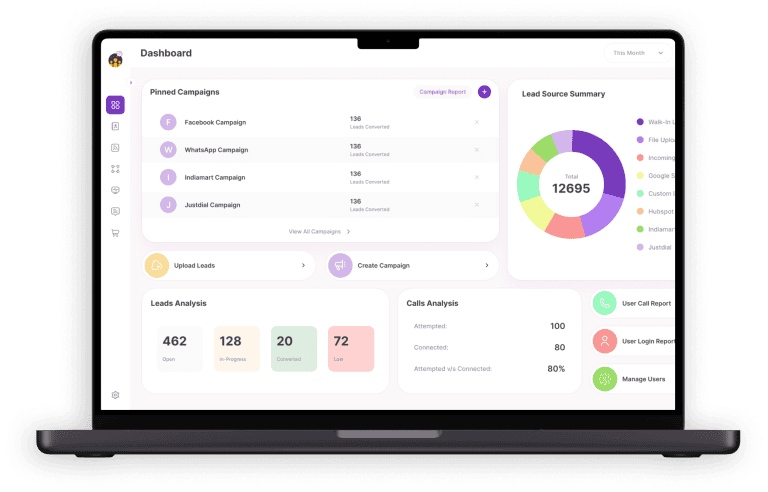
The platform enables businesses to efficiently manage leads, streamline workflows, and foster stronger customer relationships through automation and personalized communication. Its user-friendly interface and robust functionalities make it an ideal choice for e-commerce businesses looking to scale and succeed in a competitive market.

NeoDove

Pros

Cons

Key Features

  • Lead Management: Capture and track leads from multiple sources.

  • Automation: Automate repetitive tasks and follow-ups to improve efficiency.

  • Communication: Integrated calling and messaging features to engage with customers.

  • Integrations: Connects with various e-commerce platforms and tools.

  • Analytics: Detailed reports and analytics to track performance and customer behavior.

2. Klaviyo

Klaviyo isn’t your average marketing automation platform. Founded in 2012, they set out to bridge the gap between the data businesses collect and their ability to use it to drive meaningful customer interactions.
Their core mission is to empower e-commerce businesses of all sizes to own their customer data and leverage it to create personalized experiences across various channels.

Klaviyo

Pros

Cons

Key Features

  • Segmentation: Tailor your marketing campaigns to specific customer segments for increased engagement and conversions.

  • Email Marketing: Design and send targeted email campaigns to nurture leads, promote products, and drive sales.

  • SMS Marketing: Reach your customers directly on their mobile devices with time-sensitive offers and personalized messages.

  • Mobile Push Notifications: Engage your audience with relevant updates and promotions delivered straight to their smartphones.

  • Customer Data Platform (CDP): Unify your customer data from various sources to gain a 360-degree view of your audience.

3. Active Campaign

It’s a full-fledged CRM and marketing automation platform designed to help businesses of all sizes build stronger customer relationships. Founded in 2003, they’ve grown into a trusted solution for businesses looking to automate marketing tasks, personalize customer experiences, and ultimately drive sales.

Active Campaign

Pros

Cons

Key Features

  • Marketing Automation: Automate email marketing campaigns, workflows, and personalized messages across different channels.

  • CRM & Sales Automation: Manage customer data, track interactions, automate lead nurturing, and streamline your sales pipeline.

  • Reporting & Analytics: Gain valuable insights into campaign performance, customer behavior, and overall marketing effectiveness.

  • Landing Pages & Forms: Create high-converting landing pages and capture leads with customizable forms.

4. PipeDrive

Pipedrive, established in 2010, takes a unique approach to CRM. Instead of a complex, feature-laden platform, Pipedrive focuses on visual sales pipeline management. It’s a CRM designed to simplify the sales process, improve deal visibility, and ultimately help sales teams close more deals.

PipeDrive

Pros

Cons

Key Features

  • Visual Sales Pipeline: Drag-and-drop interface allows you to visualize your sales pipeline, track deal progress at every stage, and forecast sales effectively.

  • Lead Management: Capture leads from various sources, nurture them through the sales funnel, and prioritize high-potential opportunities.

  • Sales Automation: Automate repetitive tasks like sending emails, scheduling meetings, and managing activities, freeing up your sales team’s time to focus on closing deals.

  • Activity Tracking: Track all customer interactions, calls, emails, and meetings in a centralized location for complete sales history and improved collaboration.

  • Reporting & Analytics: Gain valuable insights into sales performance, identify bottlenecks, and make data-driven decisions to optimize your sales strategy.

5. Drip

Founded in 2003, Drip focuses specifically on the needs of e-commerce businesses. It goes beyond basic contact management by offering a comprehensive sales funnel solution designed to nurture leads, personalize customer experiences, and ultimately drive sales through targeted automation.

Drip

Pros

Cons

Key Features

  • E-commerce Data Integration: Seamlessly integrates with your e-commerce platform, capturing customer data and purchase history for a unified view of your audience.

  • Marketing Automation: Automate personalized email campaigns, SMS marketing, and abandoned cart recovery sequences based on customer behavior and purchase triggers.

  • Segmentation & Targeting: Segment your audience based on location, age, purchase history, and their behavior for laser-focused marketing campaigns.

  • Visual Workflow Builder: Design customer journeys with a drag-and-drop interface, creating automated workflows that nurture leads and drive conversions.

  • A/B Testing: Optimize your email campaigns and marketing efforts by testing different variations of subject lines, content, and CTAs.

  • Reporting & Analytics: Gain valuable insights into campaign performance, customer engagement, and revenue generated through your marketing efforts.

6. Agile CRM

Agile CRM, established in 2008, positions itself as an all-in-one CRM software for e-commerce designed to empower businesses of all sizes. Their focus is on streamlining sales, marketing, and service operations within a single platform, fostering better customer relationships, and driving business growth.

Agile CRM

Pros

Cons

Key Features

  • Sales Automation: Automate repetitive tasks, manage your sales pipeline efficiently, track deal progress, and forecast revenue with greater accuracy.

  • Marketing Automation: Design and send targeted email campaigns, manage social media marketing, create landing pages, and automate workflows to nurture leads and drive conversions.

  • Help Desk & Ticketing System: Manage customer support inquiries efficiently with a built-in ticketing system, track issues, and provide timely resolutions.

  • Contact Management: Organize your customer data effectively, track interactions, and gain a 360-degree view of your customer relationships.

  • Web Analytics: Gain valuable insights into website traffic and user behavior to optimize your marketing efforts and improve website conversion rates.

  • Telephony Integration: Integrate your phone system with Agile CRM for seamless call tracking, recording, and improved communication with customers. 

7. Copper

Copper, established in 2013, isn’t your ordinary CRM for e-commerce. It positions itself as the go-to CRM for businesses that heavily rely on Google Workspace for their daily operations. Copper seamlessly integrates with Gmail, Calendar, and Drive, allowing you to manage customer data and interactions directly within your familiar Google environment.

Copper

Pros

Cons

Key Features

  • Deep Google Workspace Integration: Effortlessly manage your CRM within Gmail, Calendar, and Drive, automatically syncing data and eliminating the need to switch between platforms.

  • Lead Management & Pipeline Tracking: Capture leads, manage opportunities, track deal progress through a visual sales pipeline, and forecast revenue with greater accuracy.

  • Automated Workflows: Automate repetitive tasks like sending follow-up emails, scheduling meetings, and creating tasks, freeing up your time for strategic activities.

  • Contact Management & Communication: Organize your customer data effectively, track interactions across various channels, and personalize communication from within Gmail.

  • Reporting & Analytics: Gain valuable insights into sales performance, identify trends, and make data-driven decisions to optimize your sales strategy.

  • Mobile App: Manage your CRM and access customer data on the go with the Copper mobile app.

8. Insightly

Insightly, launched in 2000, positions itself as a CRM for e-commece that goes beyond just contact management. It offers a unique blend of CRM functionalities and project management features, making it a valuable tool for businesses that need to manage customer interactions alongside ongoing projects.

Insightly

Pros

Cons

Key Features

  • CRM Features: Manage leads, contacts, and opportunities. Interact tracking, customize communication, and cultivate customer connections.

  • Project Management: Create and assign tasks, track project progress, collaborate with team members, and meet deadlines efficiently.

  • Sales Automation: Automate repetitive tasks like sending follow-up emails, scheduling meetings, and creating reports, freeing up your team’s time for closing deals.

  • Reporting & Analytics: Gain valuable insights into sales performance, project progress, and customer engagement. Make data-driven decisions to optimize your workflows.

9. Less Annoying CRM

Less Annoying CRM, established in 2009, lives up to its name by offering a refreshingly simple and user-friendly CRM for e-commerce designed specifically for small businesses. They focus on providing essential CRM functionalities without overwhelming complexity, making it easy to manage customer data, track interactions, and streamline sales processes.

Less Annoying CRM

Pros

Cons

Key Features

  • Contact Management: Organize your customer data effectively, create detailed profiles, and track interactions in one centralized location.

  • Sales Pipeline Management: Visualize your sales pipeline, track deal progress through customizable stages, and forecast sales with greater accuracy.

  • Task Management: Assign tasks to team members, set deadlines, and track progress for improved collaboration and sales efficiency.

  • Email Integration: Integrate your email with Less Annoying CRM to automatically log emails and keep all customer communication centralized.

  • Reporting & Analytics: Gain valuable insights into sales performance, identify trends, and make data-driven decisions to optimize your sales strategy.

10. LeadSquared

LeadSquared, established in 2011, offers a comprehensive CRM for e-commerce designed to empower businesses of all sizes. Their focus is on streamlining sales and marketing processes through automation, lead nurturing, and data-driven insights.

LeadSquared

Pros

Cons

Key Features

  • Lead Management & Capture: Capture leads from various sources, manage lead nurturing campaigns, and prioritize high-potential opportunities.

  • Sales Automation: Automate repetitive tasks like sending follow-up emails, scheduling meetings, and managing sales pipelines, freeing up your sales team’s time.

  • Marketing Automation: Design and send targeted email campaigns, manage social media marketing, and create landing pages to nurture leads and drive conversions.

  • Web Analytics & Reporting: Gain valuable insights into website traffic, customer behavior, and campaign performance to optimize your marketing efforts.

  • Telephony Integration: Integrate your phone system with LeadSquared for call tracking, recording, and improved communication with customers.

Conclusion

This guide explored 10 of the best CRM for e-commerce in 2024, highlighting their strengths and potential drawbacks. By carefully considering the factors outlined in this guide, you’ll be well-equipped to select the perfect CRM that empowers your business.

FAQ

Online businesses need an e-commerce customer relationship management (CRM) system to automate repetitive tasks, personalize customer experiences, gain valuable insights into customer behavior, and streamline sales and marketing efforts. This helps in increasing efficiency, improving customer satisfaction, and driving sales growth.

Key features to look for in an e-commerce CRM include:

  • Lead management
  • Marketing automation
  • Sales automation
  • Reporting and analytics
  • Integration capabilities
  • Customization options
  • Mobile accessibility
  • Customer support
  • Security and data compliance
An e-commerce CRM leverages customer data to send targeted promotions, personalized product recommendations, and birthday greetings. This level of personalization fosters stronger customer connections and increases the likelihood of repeat purchases.
NeoDove is ideal for small and medium-sized e-commerce businesses due to its comprehensive feature set, focus on automation, user-friendly interface, and robust functionalities for lead management, communication, and performance analytics.
Ensure that your e-commerce CRM offers robust security features to protect sensitive customer information and complies with relevant data privacy regulations like the General Data Protection Regulation (GDPR).
Single Blog Post l Request Demo | Left sidebar Form | Without Last Name l June 2024

Tired of Wasting Time Dialing?

Boost your telecalling efficiency with NeoDove’s Autodialer. Act now and discover what you’re missing out on!
Request Demo l Exit Intent Pop Up Elementor l October 2024

By submitting this form, I give my consent to receive message/email/whatsapp/calls and updates to my number or email address

Call Smarter,
Close Faster!

100% Lead Capture, 75% More Efficiency, 2X Engagement!

Call Smarter, Close Faster! Form

By submitting this form, I give my consent to receive message/email/whatsapp and updates to my number or email address

Still using Excel sheets Switch to NeoDove

95% business who use NeoDove report 3x more profits!

50,000 +

Happy Customers

4.8

107k reviews

Request Demo l new popup still l june 2024

By submitting this form, I give my consent to receive message/email/whatsapp/calls and updates to my number or email address

Are you Still using Excel sheets for Manual Telecalling?

These outcomes and beyond can be yours.

0%

Lead Leakage

200%

Increase in call attempts

3x

More Engagement
    Request Demo

    By submitting this form, I give my consent to receive message/email/whatsapp and updates to my number or email address

    Popup - Request Demo l Home Page Auto Load Form l May 2024

    By submitting this form, I give my consent to receive message/email/whatsapp/calls and updates to my number or email address