



















Valid till
Hrs
Mins
Secs
Valid till
Hrs
Mins
Secs

Mastering the Sales Psychology: Essential Insights for B2B Success

Key Takeaways

  • Sales psychology refers to understanding buyer behaviour, emotions, and decision-making processes to influence purchasing actions effectively.
  • Utilize techniques like storytelling, personalization, and urgency to connect with buyers emotionally and motivate faster decision-making.
  • Utilize techniques like storytelling, personalization, and urgency to connect with buyers emotionally and motivate faster decision-making. 

In B2B sales, understanding what’s going on in your prospect’s mind is often the game-changer. It’s not just about the technical details or budget talk. B2B buyers, like any other buyers, are influenced by emotions and subtle triggers. 

This brings us to an essential aspect of effective selling—sales psychology. By tapping into the psychology of sales, sellers can better connect with their audience, address their concerns, and guide them toward a buying decision that benefits both parties.

In this blog, we’ll explore the psychology of selling, examine key principles, and provide actionable sales tips to help you craft a more persuasive sales strategy.

What is The Psychology of Sales?

Sales psychology is understanding human behavior and how it impacts the buying process. It focuses on understanding what motivates buyers to say “yes” and how their emotions, fears, and cognitive biases shape their decisions.

While B2B buyers may rely on data, logic, and ROI when making decisions, emotions such as fear of missing out, desire for success, or trust in the seller play a crucial role.

At its core, the psychology of sales blends both art and science, using psychological principles to guide buyers through a more efficient decision-making process.

The Principles of the Psychology of Sales

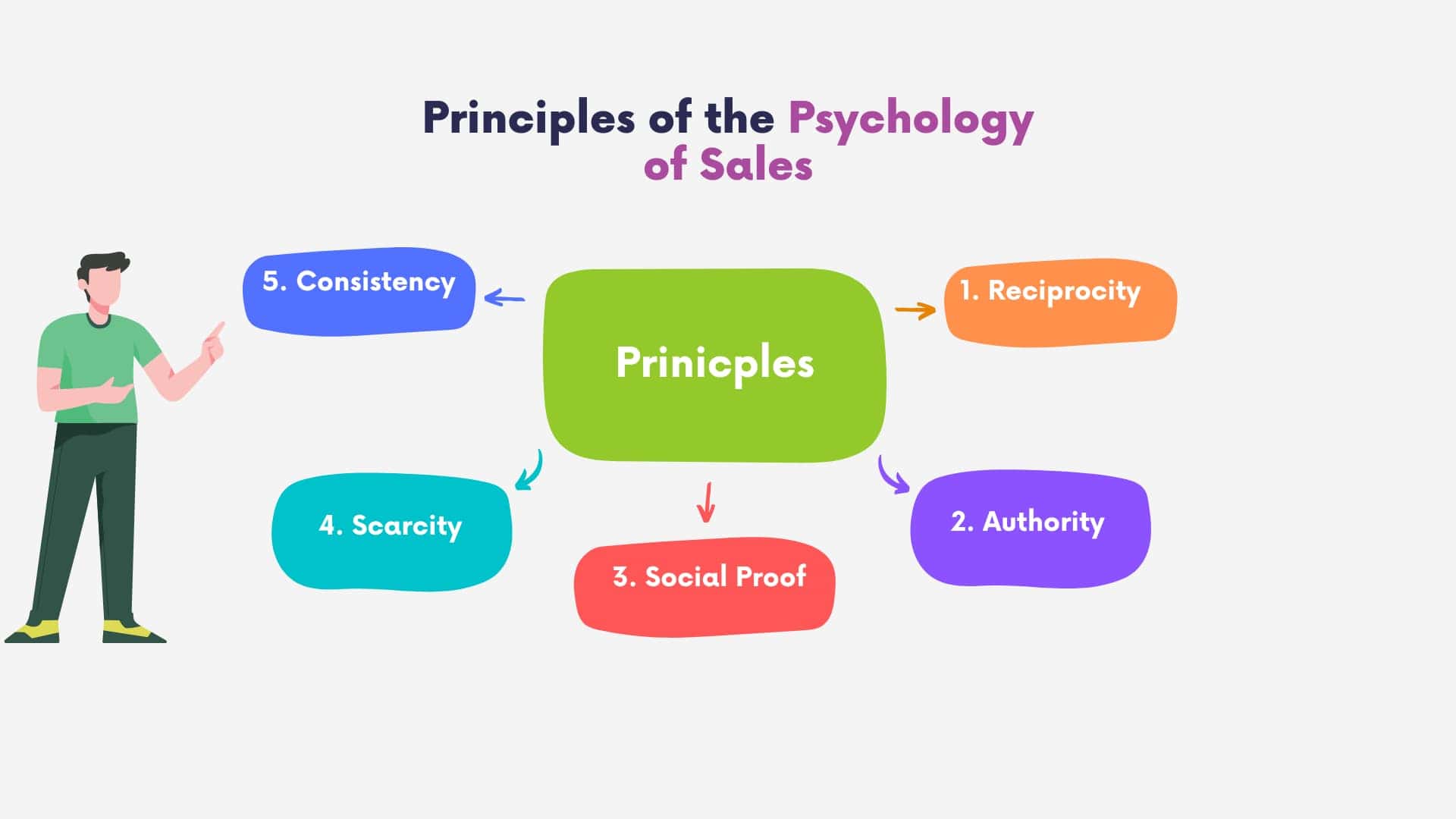
Several key principles shape the psychology of salesmanship. These foundational ideas help salespeople align their approach to the natural tendencies and thought patterns of buyers:

1) Reciprocity

When you give something, people feel inclined to give back. Offering free trials, reports, or helpful advice can create a sense of obligation in the buyer.

2) Authority

Buyers trust sellers who demonstrate expertise and credibility. Establishing authority through thought leadership, testimonials, or certifications can greatly influence decisions.

3) Social Proof

Buyers often look to others for validation. Highlighting case studies, success stories, or client testimonials taps into this need for reassurance.

4) Scarcity

Fear of missing out (FOMO) is a strong motivator in sales. Limited-time offers or exclusive deals make products or services seem more valuable.

5) Consistency

People tend to align their future actions with their previous commitments. When a prospect agrees to a small request, they’re more likely to say yes to a bigger one later on.

By leveraging these sales principles, salespeople can effectively shape their messaging and guide potential buyers toward a positive purchasing decision.

Why is the Psychology of Sales Important?

Understanding the psychology of sales is crucial for several reasons:

1) Improved Customer Understanding

By understanding the buyer’s mindset, salespeople can uncover the factors driving their decisions. This knowledge allows them to tailor their pitches to specific pain points and desires, resulting in clearer and more effective communication.

Sales Tip – Always listen more than you speak to uncover key emotional drivers.

2) Stronger Connections

When sales professionals address the psychological triggers of their clients, they form deeper, more meaningful connections. This emotional connection establishes trust and loyalty, nurturing long-term relationships that are essential for successful sales.

Sales Tip – Personalize your approach by reflecting empathy and understanding in every interaction.

3) Better Negotiation Outcomes

Having insight into the buyer’s emotional needs enables sellers to manage objections with ease. They can also navigate the negotiation process more confidently, understanding when and how to push, and when to back off. It’s all about knowing the buyer’s emotional triggers and using them to your advantage.

Sales Tip – Stay patient and observe the buyer’s emotional cues to guide the negotiation smoothly.

4) Effective Problem Solving

Understanding the psychology of sales allows salespeople to recognize the emotional triggers behind a buyer’s behavior. By identifying these triggers, they can pinpoint the customer’s pain points more accurately and offer personalized solutions.

Sales Tip – This approach not only addresses their immediate concerns but also builds trust by showing genuine care and empathy.

5) Higher Conversion Rates

When sales professionals align their strategies with the buyer’s mindset and emotional drivers, they create more persuasive and relatable pitches. This alignment makes the decision-making process smoother for the buyer, increasing the likelihood of a purchase. 

Sales Tip – Mastering sales psychology leads to consistently higher conversion rates and long-term customer relationships. and empathy.

Trusted by 40,000+ Users
Struggling to manage your leads? 🤔
Put an end to old-fashioned lead management and get started with smarter lead management today!
Blog - CTA l Request Demo l April 2024

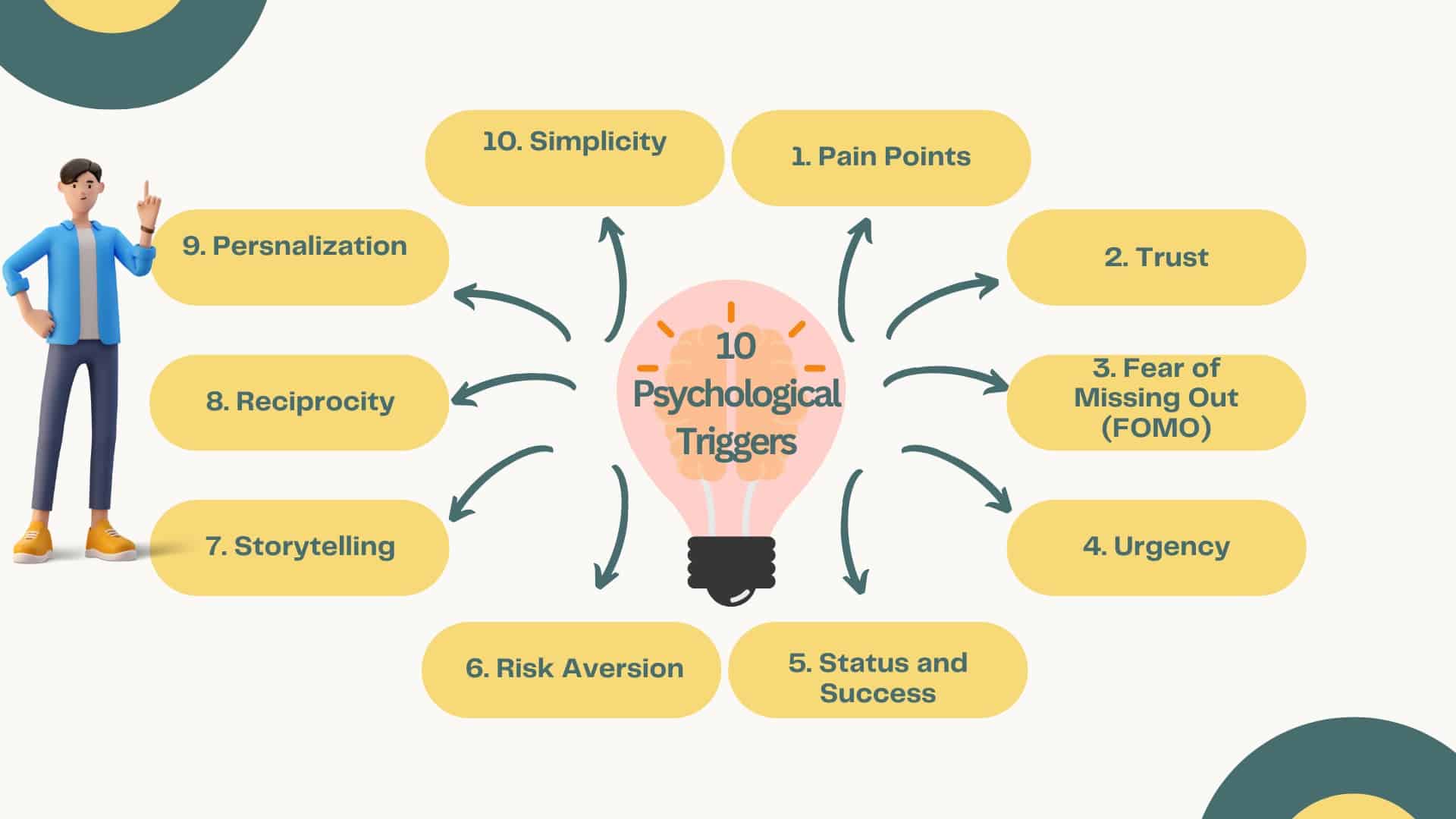
10 Psychological Triggers to Boost Your Sales

Understanding the psychological triggers that influence buyer behaviour can significantly enhance your B2B sales efforts. 

These principles of sales psychology can be applied to guide prospects towards a purchasing decision while tapping into their subconscious motivations. 

Let’s dive deeper into the ten most effective psychological triggers:

1) Pain Points

The key to successful selling is identifying and addressing your buyer’s pain points. Whether it’s inefficiency, high costs, or lost opportunities, understanding what frustrates or concerns your buyer is crucial. 

By using the psychology of sales, you can position your product as the solution to their pain, making it more appealing.

Sales Tip – Ask open-ended questions to uncover the deep-rooted problems your prospect is facing, and then show how your product can eliminate them.

2) Trust

Building trust is foundational in B2B relationships. Buyers prefer vendors who are reliable, credible, and demonstrate expertise. 

In sales psychology, trust is built by offering value consistently and showcasing your product’s success in the industry. The more your buyer trusts you, the more likely they are to make a purchase.

Sales Tip – Share case studies, client testimonials, and industry certifications to enhance your credibility.

3) Fear of Missing Out (FOMO)

The psychology of selling often leverages FOMO to drive urgency. When buyers believe they might lose out on a great deal or an innovative solution, they are more likely to act quickly. Creating a sense of exclusivity or scarcity can propel decision-making in your favour.

Sales Tip – Offer limited-time promotions, discounts, or “exclusive” packages to generate this powerful emotional response.

4) Urgency

Similar to FOMO, urgency is another potent psychological trigger in sales. The perception that time is running out compels buyers to act faster. According to sales psychology, urgency creates a sense of importance that encourages immediate decision-making.

Sales Tip – Use deadlines or countdowns to create urgency around your offer—whether it’s a limited-time price reduction or a special offer for early adopters.

5) Status and Success

In B2B environments, buyers are often motivated by how a purchase will enhance their company’s status or contribute to their professional success. 

Position your product as one that can make the buyer look good, solve critical issues, or lead to measurable success. 

In sales psychology, appealing to the buyer’s need for recognition and success can significantly influence the buying process.

Sales Tip – Highlight the success stories of similar businesses that have used your product to achieve great results, appealing to their desire for status and achievement.

6) Risk Aversion

B2B buyers are typically risk-averse, especially when it comes to making large investments. The psychology of salesmanship teaches that by reducing perceived risks, you can increase buyer confidence. 

Offering guarantees, free trials, or flexible contracts can lower the barrier to entry and encourage the buyer to move forward.

Sales Tip – Offer a no-strings-attached trial period or money-back guarantee to alleviate the fear of making a wrong decision.

7) Storytelling

Storytelling is a powerful tool in sales psychology. Humans connect with stories emotionally, and buyers are no different. When you share compelling success stories, narratives about real-world challenges, or case studies, you create a strong emotional connection with your buyer.

Sales Tip – Use stories that align with the buyer’s needs and challenges, making them envision how your solution could positively impact their own situation.

8) Reciprocity

Reciprocity, one of the core principles in the psychology of selling, works by offering something of value first. This might be a free resource, consultation, or valuable insight, which in turn encourages the buyer to reciprocate with their act, such as signing up for your service or agreeing to a demo.

Sales Tip – Give something away—like a free ebook, tool, or consultation—to create a sense of obligation in your buyer to give back by engaging with your product or service.

9) Personalization

Personalized approaches resonate more deeply with B2B buyers. According to sales psychology, a tailored message or offer feels more relevant and meaningful to the buyer. This triggers a positive emotional response, increasing the likelihood of conversion.

Sales Tip –

  • Leverage personalized email campaigns. 
  • Tailor your pitch to directly tackle the buyer’s unique challenges.
  • Adapt your offers to suit their business needs. 
  • Personalization is key to building trust and rapport.

10) Simplicity

The human brain prefers simplicity. Buyers often feel overwhelmed by complex choices and lengthy decision-making processes. 

The psychology of salesmanship teaches that when you simplify your offering and make the decision-making process clear and easy, buyers are more likely to follow through.

Sales Tip – Streamline your pricing, simplify product descriptions, and provide clear next steps in the buying process. When it’s easy to understand and act, you reduce friction and increase conversions.

How to Use Sales Psychology for Sales?

Incorporating the psychology of salesmanship into your sales strategy isn’t just about understanding psychological concepts; it’s about applying them in practical ways to better connect with your prospects and drive decision-making.

Here’s how you can incorporate sales psychology effectively:

1) Start with Empathy

Understanding your buyer’s needs, pain points, and goals allows you to speak their language and position your product as the perfect solution. 

When you show empathy, you humanize the sales process and create an emotional bond that is critical for building rapport.

Sales Tip – Practice active listening, ask questions about their specific pain points, and avoid pushing your product too early in the conversation.

2) Use Storytelling

Humans are naturally wired to respond to stories. Sales psychology teaches us that facts and data may inform, but stories persuade. 

Crafting narratives around your product or service makes it easier for your buyers to connect with your offering and visualize their own success emotionally.

Sales Tip – Share real-life customer success stories, case studies, or personal anecdotes to illustrate how your solution can solve their problem. Relatable and engaging narratives lead to deeper emotional connections, improving your chances of closing the deal.

3) Provide Social Proof

One of the key triggers in the psychology of sales is social proof. People often follow the lead of others, especially in uncertain situations.

B2B buyers are more likely to trust your product when they see evidence that other businesses like theirs have successfully used your solution.

Sales Tip – Highlight reviews, endorsements, or awards your product has received, and prominently display recognizable clients’ logos to enhance your product’s credibility.

4) Effective Problem Solving

Making people feel that something is limited or time-sensitive is another strong tactic based on sales psychology. When buyers believe that they might miss out on an opportunity or that time is running out, they are more inclined to take immediate action. 

Limited-time offers, exclusive deals, or emphasizing the uniqueness of your product can nudge buyers toward making faster decisions.

However, it’s important to use this technique genuinely—fabricated urgency or scarcity can backfire if prospects sense manipulation.

Sales Tip – Offer time-sensitive discounts, limited-edition products, or exclusive offers for early adopters to create a fear of missing out (FOMO) and encourage quicker decision-making.

5) Personalize

One-size-fits-all strategies rarely work in sales. According to sales psychology, personalization significantly enhances the emotional connection between the buyer and your solution. 

Tailor your messaging, pitches, and offers to meet the specific needs and challenges of individual buyers.

When buyers feel that a product is designed to address their unique circumstances, they are more likely to engage positively with it. 

Personalization demonstrates that you know their business and that your product is the right solution.

Sales Tip – Segment your audience and craft tailored messaging for each buyer persona. Use personalized emails, product demos, and content that speaks directly to the challenges they face, enhancing your product’s relevance.

Bonus Tips: Sales Tips to Win More Sales

Here are some sales tips to improve your chances of success in B2B sales:

  • Ask open-ended questions: Engage buyers in conversation to uncover their deeper needs and concerns. It helps you tailor your pitch for better results.
  • Mirror their language: Subtly mirroring the language of your prospects can make them feel more understood and comfortable.
  • Use the power of silence: After making a key point, pause. Silence can prompt the buyer to think more deeply about what you’ve said, giving your message more impact.
  • Create a vision of success: Help your buyers visualize how your solution can transform their business, making the benefits more tangible.
  • Follow up strategically: Consistent follow-ups with added value help keep you on top of mind and build a sense of trust and reliability.
Take your telecalling team to the next level
Empower your telecallers with NeoDove, download our handy guide today!

    Blog - CTA l Telecalling Team l May 2024

    Conclusion

    Incorporating the psychology of sales into your B2B sales strategy can be the game-changer that sets you apart from competitors.

    Understanding the emotional triggers, cognitive biases, and behavioural patterns that drive decisions allows you to connect with buyers on a deeper level, build trust and foster long-term relationships. 

    By using these sales tips, you can tap into the human side of decision-making and increase your chances of closing deals successfully.

    Frequently Asked Questions (FAQs)

    It involves studying human behavior and emotions to gain insights into what drives buyers to make purchasing decisions.

    By understanding buyer pain points, building trust, and using psychological triggers like reciprocity and social proof, you can better influence buying decisions.

    Sales psychology helps you connect with buyers on an emotional level, improving communication and trust and ultimately increasing your chances of closing deals.

    Apply sales psychology by understanding buyer pain points, using empathy, storytelling, social proof, and urgency, and personalizing your approach to address specific needs. 

    Trust is key in the psychology of sales, helping reduce buyer hesitation. Building trust through transparency and value increases the likelihood of closing deals.

    In B2B, sales psychology focuses on trust, ROI, and long-term benefits, while B2C leans more on emotional appeal and instant gratification. 

    Ready to Transform Your Telecalling Operations?

    Request Demo l Case Study Page Form l December 2024

    By submitting this form, I give my consent to receive message/email/whatsapp and updates to my number or email address

    Tired of Wasting Time Dialing?

    Boost your telecalling efficiency with NeoDove’s Autodialer. Act now and discover what you’re missing out on!
    Request Demo l Exit Intent Pop Up Elementor l October 2024

    By submitting this form, I give my consent to receive message/email/whatsapp/calls and updates to my number or email address

    Call Smarter,
    Close Faster!

    100% Lead Capture, 75% More Efficiency, 2X Engagement!

    Call Smarter, Close Faster! Form

    By submitting this form, I give my consent to receive message/email/whatsapp and updates to my number or email address

    Still using Excel sheets Switch to NeoDove

    95% business who use NeoDove report 3x more profits!

    50,000 +

    Happy Customers

    4.8

    107k reviews

    Request Demo l new popup still l june 2024

    By submitting this form, I give my consent to receive message/email/whatsapp/calls and updates to my number or email address

    Are you Still using Excel sheets for Manual Telecalling?

    These outcomes and beyond can be yours.

    0%

    Lead Leakage

    200%

    Increase in call attempts

    3x

    More Engagement

      Request Demo

      By submitting this form, I give my consent to receive message/email/whatsapp and updates to my number or email address