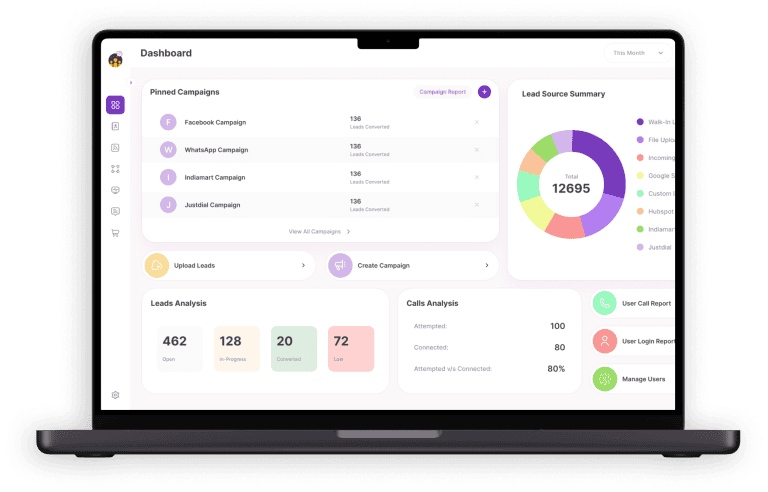





Sales management is the backbone of every growing business. It involves planning, directing, and controlling the sales process to achieve revenue goals and strengthen customer relationships. Good sales management makes sure every lead is tracked. It helps use every opportunity and ensures each salesperson does their best.
In today’s competitive market, understanding sales management is more than just hitting targets. It’s about creating systems that support long-term growth.
What is Sales Management?
Sales management is the process of creating a sales strategy. It involves using a skilled team to carry it out. The goal is to keep improving it for better results. It combines data analysis, communication tools, and leadership practices to guide a team toward achieving set targets.
At its core, sales management includes three major functions:
- Sales Planning: Setting sales goals, defining strategies, and forecasting future revenue.
- Sales Operations: Managing tools, workflows, and resources needed for execution.
- Sales Analysis: Tracking performance metrics and key performance indicators (KPIs) to evaluate success.
With tool like automated workflows, businesses can improve communication. They can also speed up responses and boost sales performance.
Why Sales Management is Important for Business Growth
Sales management ensures alignment between business goals and sales efforts. Without a proper system, teams might lose focus, skip follow-ups, or miss key opportunities.
1. Increases Revenue and Growth
Effective sales management helps identify high-potential leads and convert them into paying customers. Tool like sales management software help teams track prospect conversions and forecast revenue accurately.
2. Improves Team Productivity
Sales managers can track daily activities and boost productivity. They can use tools like customer relationship management (CRM) software, emails, and follow-up schedules for better communication.
3. Strengthens Customer Relationships
A well-managed sales process ensures regular engagement with prospects and customers. By keeping track of phone call details, past marketing messages, and communication history, teams can personalize every interaction.
4. Enhances Forecasting Accuracy
Sales forecasting is one of the most critical elements of management. When sales data and key performance indicators are analyzed regularly, companies can anticipate trends and make informed business decisions.
5. Enables Continuous Improvement
Sales management allows for consistent evaluation of team performance. Regular tracking of prospect conversions, follow-up completion, and pipeline status provides clarity and direction.
Key Components of Sales Management
A successful sales management process includes several essential components that help in managing teams, customers, and results effectively.
1. Sales Planning and Forecasting
This involves setting realistic sales targets, analyzing past data, and predicting future revenue. Good forecasting allows teams to prepare better and allocate resources efficiently.
2. Lead Tracking and Management
Sales managers use tools that can track leads from the first contact to the final sale. Automation helps log phone call details, emails, and meetings in one place for complete visibility.
3. Communication and Collaboration
Using a calling dialer or integrated customer relationship management (CRM) software ensures seamless communication within the sales team and with clients. These tools help automate calls, share updates, and manage customer records easily.
4. Performance Evaluation
Tracking sales performance using metrics such as conversion rates, deal size, and sales cycle length helps in identifying top performers and areas needing improvement.
5. Workflow Automation
Implementing automated workflows can save hours of manual effort. For instance, setting up reminders for scheduling follow-ups ensures no potential customer is left unattended.
Top 5 Benefits of Effective Sales Management
When executed effectively, sales management leads to measurable business benefits. Let’s explore a few:
1. Better Alignment Between Teams
Marketing and sales often overlap. Sales management bridges this gap by ensuring that marketing messages and sales goals work together toward common business outcomes.
2. Enhanced Customer Insights
With CRM and analytics, managers can access data on prospect conversions, buying behaviors, and engagement trends, allowing for better strategy formulation.
3. Increased Sales Efficiency
Automation tools and structured workflows enable teams to focus on selling rather than administrative tasks. This leads to quicker decision-making and higher sales closure rates.
4. Data-Driven Decision Making
By analyzing key performance indicators and historical data, managers can make accurate decisions about team targets, incentives, and strategies.
5. Sustainable Business Growth
A strong sales management system creates repeatable processes that ensure consistent growth, even as the business scales.
Actionable Tips for Improving Sales Management
- Set Clear Sales Goals: Define measurable targets based on historical data and market trend
- Leverage CRM Tools: Use CRM software to organize customer information, communication history, and performance reports.
- Automate Routine Tasks: Implement automation for follow-ups, task assignments, and report generation.
- Monitor Key Metrics: Regularly track KPIs such as conversion rates, sales revenue, and average deal value.
- Encourage Training and Feedback: Invest in team training to boost communication and selling skills.
Real-World Example of Successful Sales Management
A mid-sized real estate firm struggled with inconsistent sales and missed follow-ups. Salespeople manually tracked leads using spreadsheets and emails, leading to delays and lost opportunities.
After adopting sales management software for real estate, the results were transformative:
- Automated logging of phone calls and emails improved lead tracking.
- Follow-ups became timely, ensuring no prospects were missed.
- Sales forecasting became accurate, helping management plan better.
- Team productivity increased by 35%, and prospect conversions rose by 40%.
This example shows how combining strong sales leadership with the right sales management software can significantly improve performance and revenue growth.
Conclusion
Sales management is more than just supervising a team—it’s about building a framework that consistently delivers results. From forecasting revenue to tracking leads and maintaining strong customer relationships, every step contributes to long-term success.
Businesses that adopt structured systems, leverage technology, and focus on performance metrics not only increase sales but also strengthen customer trust and loyalty.
Frequently Asked Questions (FAQs)
1. What is the main goal of sales management?
The main goal of sales management is to maximize sales revenue by guiding and supporting the sales team through planning, organization, and performance tracking.
2. How does sales management improve team performance?
By setting clear goals, monitoring progress through KPIs, and providing regular feedback, managers can help teams perform more efficiently and achieve better results.
3. Why is CRM important in sales management?
CRM tools help track customer data, manage interactions, and automate repetitive tasks like follow-ups, ensuring smoother communication and stronger relationships.
4. What role does forecasting play in sales management?
Forecasting helps predict future sales trends, allocate resources wisely, and prepare strategies to meet changing customer demands.
4. Can sales management improve customer relationships?
Yes. By monitoring follow-ups, tracking interactions, and personalizing communication, sales management ensures stronger and more consistent relationships with customers.