


















Join our WhatsApp Channel for the latest updates.
Table of Contents
ToggleKey Takeaways
In the sales world, understanding the terms “lead” and “prospect” is crucial for nurturing relationships and moving people through the sales funnel.
While they are often used interchangeably, there are essential differences that influence how you approach your sales strategy. So, what is the difference between a lead and a prospect, and how do these distinctions affect your sales efforts?
This blog will break down the concepts of prospect vs. lead, providing clarity on how each fits into the sales process, and why distinguishing between them can elevate your business success.
A lead in sales refers to someone who has expressed initial interest in your product or service. They could have shared their contact details, interacted with your website, or downloaded a free resource. A lead is essentially the starting point in your sales pipeline.
Leads typically have potential but require further qualification to determine whether they’re truly interested in making a purchase. Not every lead will turn into a prospect, but leads are the first step towards identifying viable sales opportunities.
Tip – A lead is when an individual expresses initial interest in your product, marking the start of your sales pipeline, but requires further qualification to assess their true buying intent.
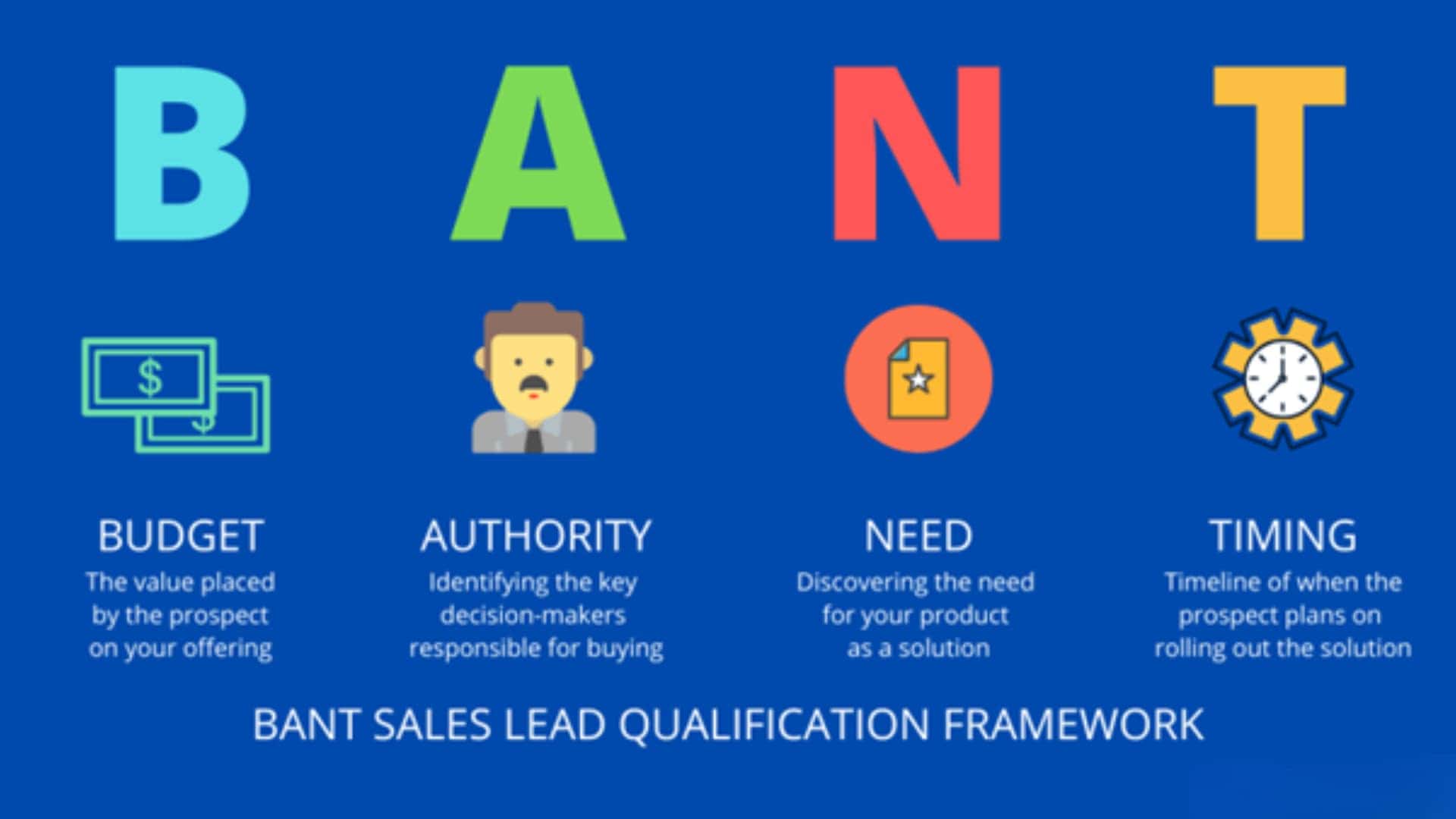
A prospect is a lead that has been qualified through engagement and research, demonstrating a stronger intent to buy. Prospects typically meet certain criteria that align with your target audience, such as budget, authority, need, and timeline (often abbreviated as BANT).
Prospects are much closer to making a purchase decision compared to leads. They have shown interest and engagement with your brand and have become an active participant in the sales conversation.
Tip – A prospect is a qualified lead with a clearer intent to buy, aligning with key criteria like budget, authority, need, and timeline, making them closer to a purchasing decision.
Now that we’ve defined each, let’s dive into the key differences between a prospect vs. lead.
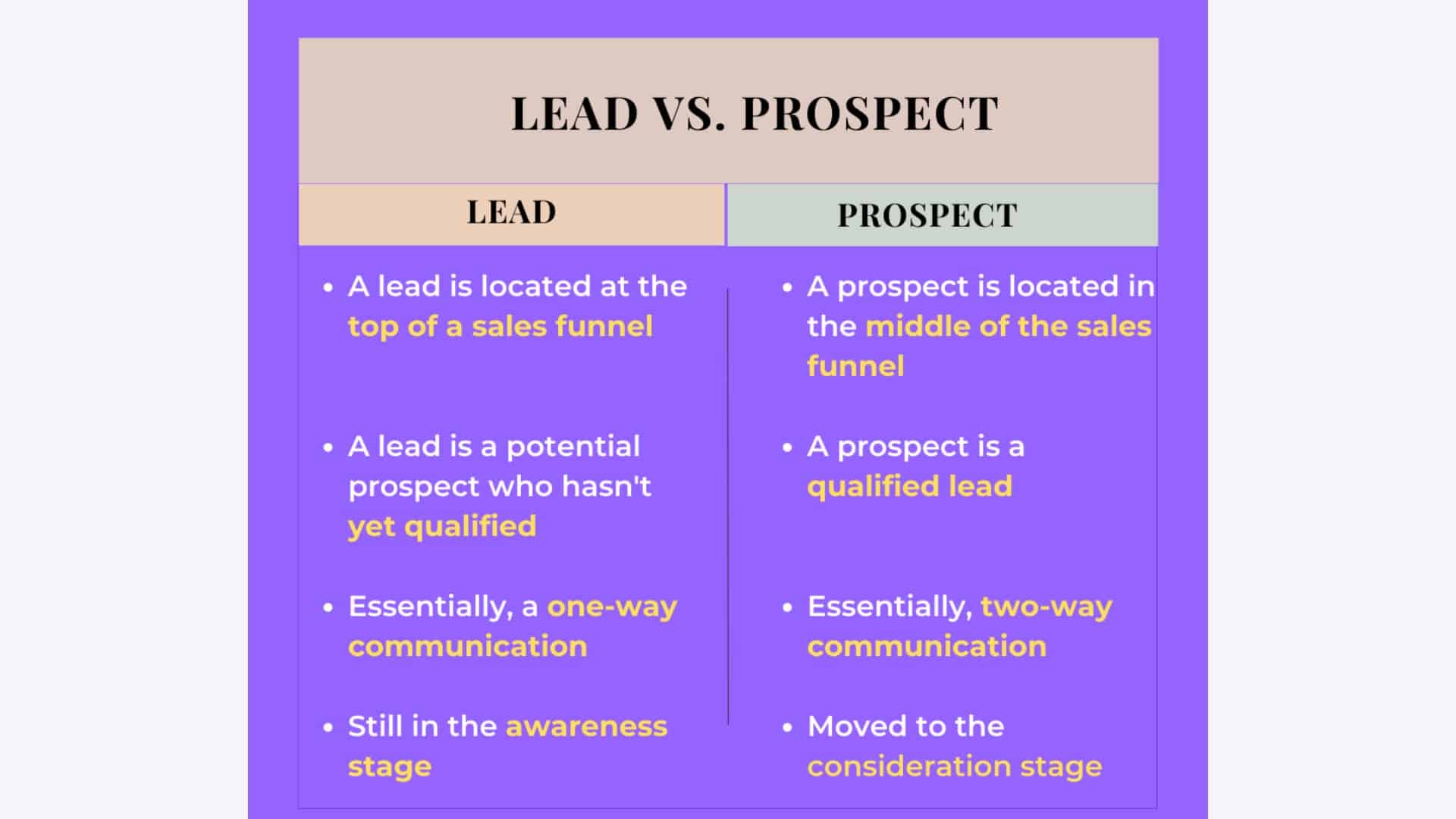
Lead: A lead has expressed interest in your product or service, such as filling out a form or subscribing to a newsletter, but hasn’t engaged deeply enough to be qualified.
Prospect: A prospect has demonstrated a more focused interest, showing a clear need for your solution, and is actively engaging with your brand.
Lead: Leads need to be qualified by the sales team, which involves assessing demographic, behavioral, and firmographic data to determine if they fit the ideal customer profile.
Prospect: Prospects have already been qualified and meet the necessary criteria, making them a stronger candidate for conversion.
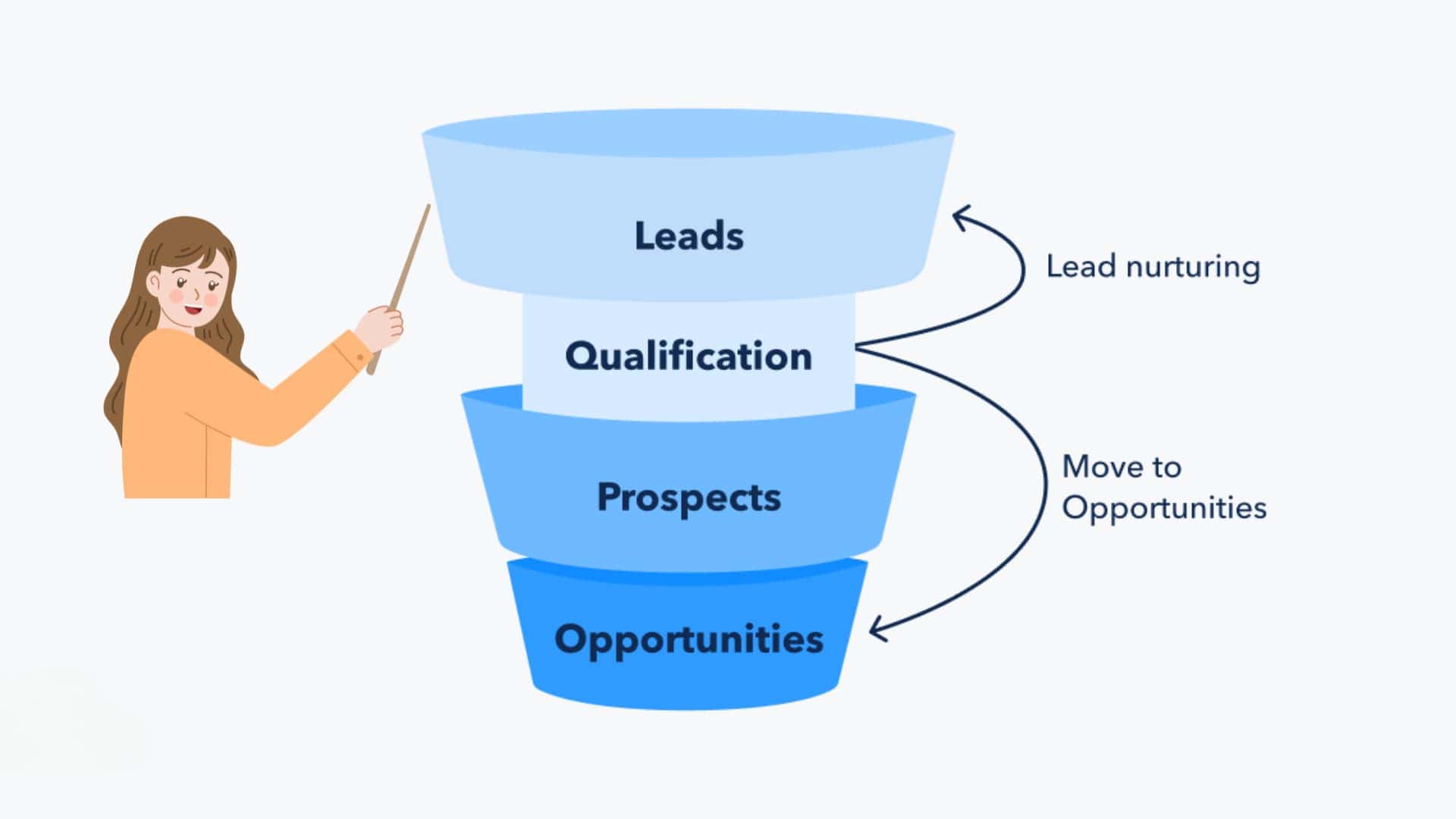
Lead: Leads are at the top of the sales funnel, where interest has been sparked but engagement is still minimal.
Prospect: Prospects are further down the funnel, actively moving toward a purchase decision as their engagement and intent increase.
Lead: Communication with leads is more generalized and educational, often delivered in a one-size-fits-all format to introduce your product or service.
Prospect: For prospects, communication is personalized, focusing on addressing their specific pain points or needs to facilitate a purchasing decision.
Lead: Leads require nurturing and may not be ready to make a purchase immediately. They need time to understand your offering and build trust.
Prospect: Prospects are much closer to being sales-ready, having shown genuine interest and a higher likelihood of converting into customers.
In Short Lead vs. Prospect: Key differences are:
The difference between lead and prospect lies in their position in the buyer’s journey. While leads are at the awareness stage, prospects are in the consideration or decision-making phase.
Leads are potential customers who have expressed a mild interest, while prospects are those who have demonstrated clear buying intent and are closer to conversion.
To convert leads into prospects, businesses must focus on engagement and qualification. Here are some effective strategies:
Engage leads through targeted email campaigns, social media interactions, and valuable content. Regular touchpoints help gauge their interest and readiness, facilitating their transition from lead to prospect
Tip – Consistent engagement fosters stronger relationships, making conversion more likely.
Categorize your leads according to their industry, company size, or behavior. This enables you to personalize your messaging, increasing relevance and improving the chances of moving leads to the prospect stage.
Tip – Personalization is key—tailored messages convert better.
Utilize a lead scoring system to evaluate and rank leads based on engagement and suitability. This approach enables you to concentrate on the most promising leads, facilitating their transition to prospects.
Tip – Prioritize high-scoring leads for a more efficient sales process.
Offer valuable resources like webinars, whitepapers, and case studies. These tools help establish your authority and build trust, making leads more likely to transition into prospects.
Tip – Show value early to position yourself as a trusted advisor.
It’s important to understand that leads and prospects require different approaches in your marketing and sales efforts.
In B2B sales, this distinction becomes even more important because of the complex buying process and the need to allocate resources effectively.
Businesses often use qualification methods like BANT to assess whether a lead is ready to transition into a prospect.
The BANT method—Budget, Authority, Need, and Timeline—is a commonly used framework in B2B sales to qualify leads and determine if they can move into the prospect stage:
Does the lead possess the financial means to invest in your solution?
B2B products or services often require significant investment, and evaluating a lead’s budget early on ensures that time and effort aren’t wasted on unqualified leads.
Is the lead a decision-maker or an influencer in their organization?
In B2B sales, identifying whether the lead has the authority to make purchasing decisions is critical. A prospect typically has the decision-making power or can strongly influence the decision.
Does the lead have a specific need for your product or service?
A key part of moving from lead to prospect is identifying whether the lead has a genuine problem that your solution can address. Without this, there is little chance of conversion.
Is the lead prepared to make a purchasing decision within an appropriate timeframe?
Timing is essential in sales. A lead that is interested in your product but doesn’t plan to make a decision for another year may not yet qualify as a prospect. A prospect typically has an imminent need and is ready to act soon.
By using the BANT criteria, businesses can efficiently distinguish between leads vs. prospects, ensuring that only those who are more likely to convert receive focused attention from the sales team.
This leads to better resource allocation, higher conversion rates, and more effective B2B lead management.
Understanding the distinction between prospect vs. lead is essential for optimizing your sales efforts. Leads are individuals or businesses who have expressed some level of interest in your product or service but still require nurturing.
Prospects are qualified leads with a clear interest and the potential to convert into customers. By segmenting and targeting these groups differently, your sales and marketing teams can allocate resources more effectively, tailor communications, and, ultimately, close more deals.

100% Lead Capture, 75% More Efficiency, 2X Engagement!
Book a free demo and see how you can close more deals, faster!


95% business who use NeoDove report 3x more profits!
Happy Customers
107k reviews


Book a free demo and see how you can close more deals, faster!

![]()
95% business who use NeoDove report 3x more profits!
Happy Customers
107k reviews

These outcomes and beyond can be yours.
Lead Leakage
Increase in call attempts
More Engagement