


















Join our WhatsApp Channel for the latest updates.
Table of Contents
ToggleKey Takeaways
Imagine this: you’ve invested time and money in generating leads, but when it comes time to follow up, you’re not sure which ones are worth your effort.
Sound familiar? That’s where lead scoring comes in. For small businesses navigating the competitive landscape, lead scoring is not just a buzzword; it’s a game changer.
It helps you identify and prioritize leads based on their likelihood to convert, ensuring you focus your resources on those who are most interested in what you offer.
In this comprehensive lead scoring guide, we’ll break down what lead scoring is, how to calculate lead scores, and share effective strategies and techniques that can transform your marketing efforts.
Lead scoring is a systematic approach used by businesses to rank potential customers based on their perceived value and likelihood to convert into paying clients.
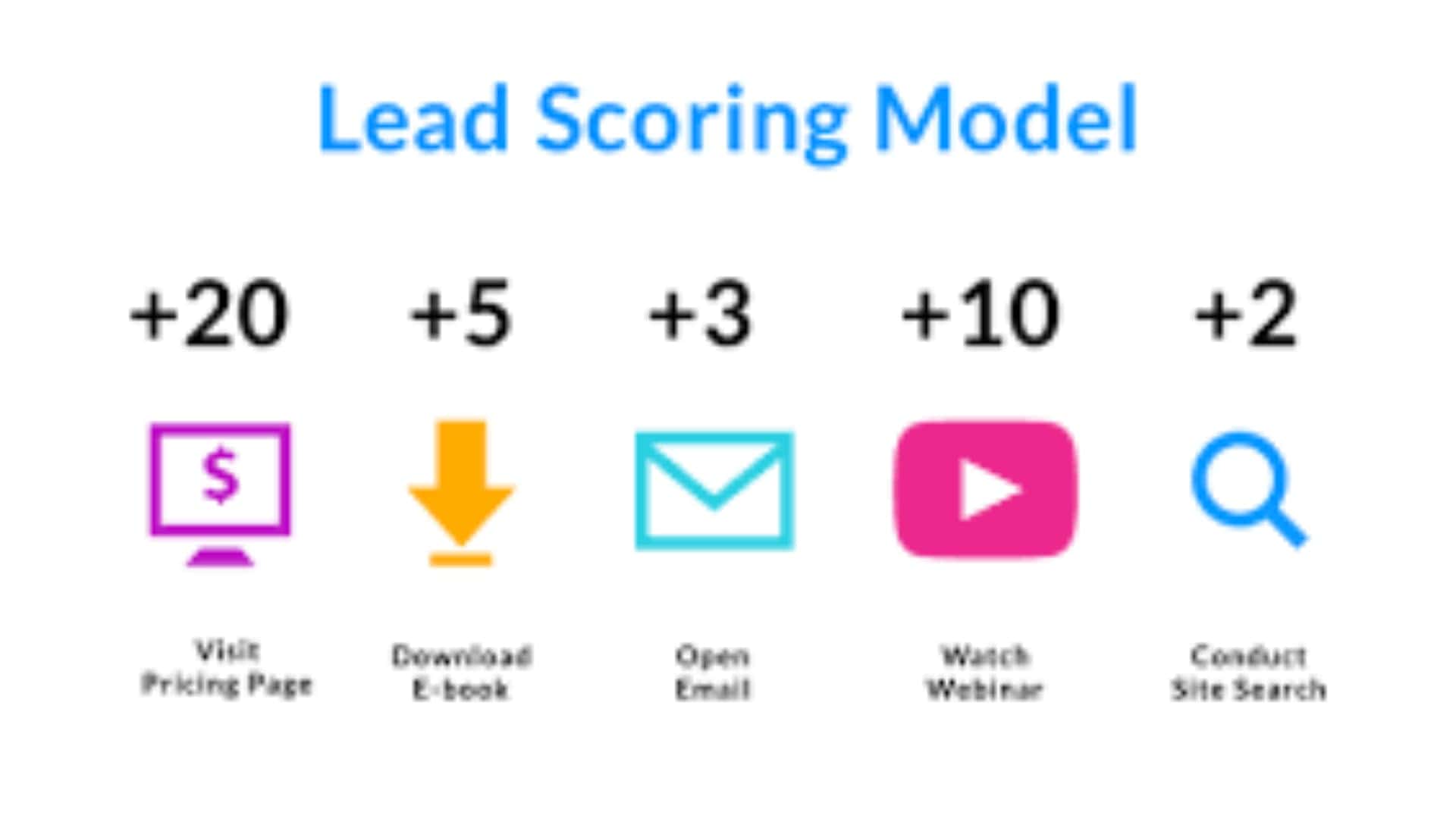
This ranking is determined by assigning point values to various attributes, such as demographic information, engagement levels, and interactions with your brand.
By analyzing these factors, businesses can prioritize leads, directing their marketing and sales efforts towards those most likely to result in sales.
Essentially, lead scoring helps streamline your sales process, ensuring that resources are focused on leads that matter most.
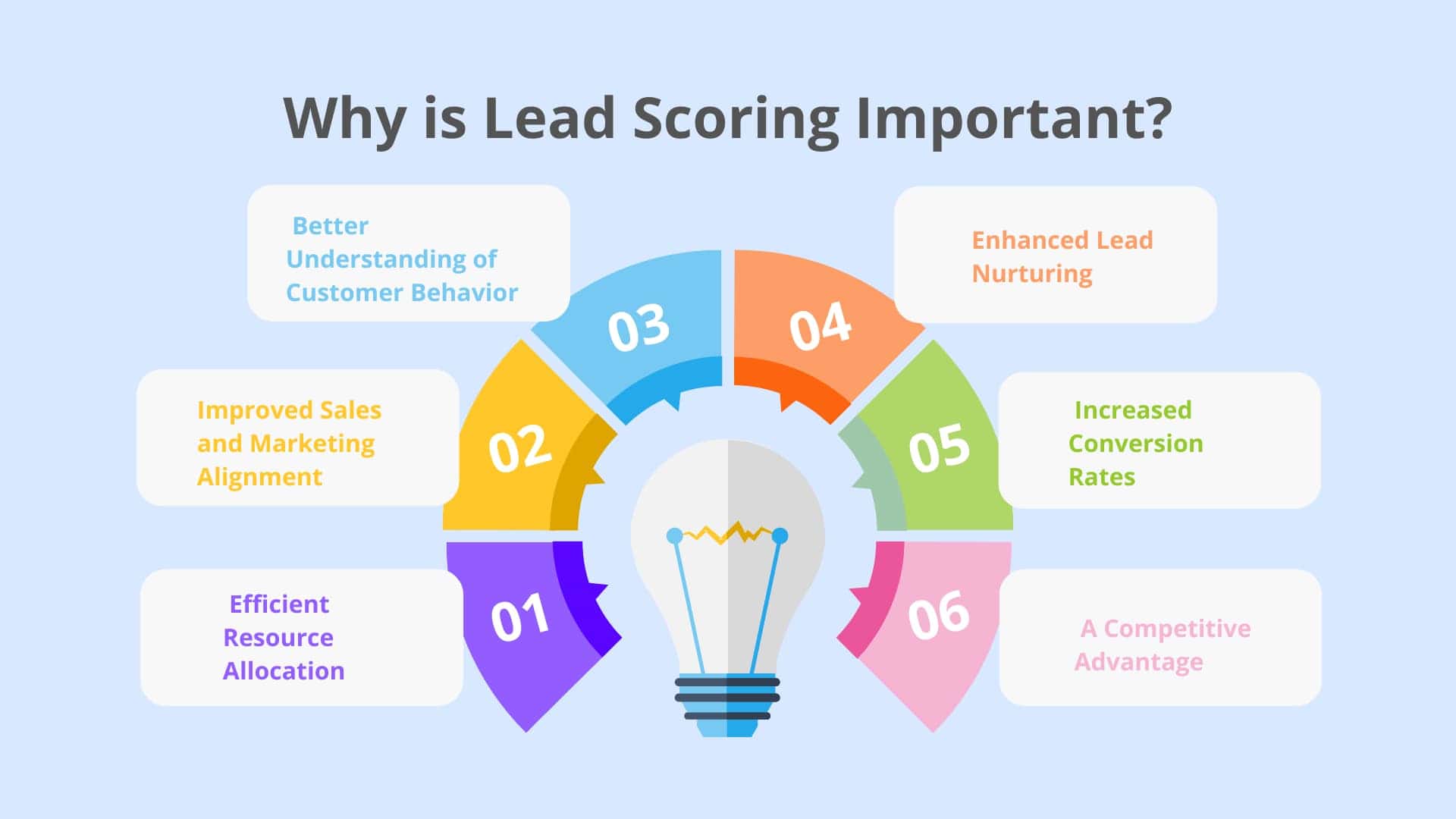
Here are several key reasons why implementing a robust lead scoring model is essential for small businesses.
Small businesses often operate with limited resources. By adopting a lead scoring strategy, businesses can effectively allocate their time and budget toward leads that are more likely to convert.
Rather than treating every lead the same way, lead scoring enables companies should focus on high-quality leads, minimizing wasted effort and increasing overall efficiency.
This prioritization ensures that sales teams spend more time engaging with leads that demonstrate genuine interest and potential, leading to higher conversion rates.
Tip – Regularly analyze your scoring criteria to make sure it aligns with current business objectives and market trends.
Lead scoring fosters collaboration between marketing and sales teams. When both teams understand the criteria used in the lead scoring model, they can work together more effectively.
Marketing can focus on generating high-scoring leads, while sales can refine their approach based on the scoring system. This collaboration minimizes conflicts and ensures that the sales team gets leads with a higher likelihood of conversion, improving the overall sales process.
Tip – Hold regular meetings between marketing and sales teams to assess lead quality and improve your scoring models.
Implementing lead scoring helps businesses gain deeper insights into their customer base. By tracking engagement levels and assigning scores based on interactions, companies can identify which leads are most interested in their products or services.
This data not only informs marketing strategies but also helps businesses tailor their messaging to resonate with specific audience segments. Understanding customer behavior allows for more personalized marketing efforts, improving overall engagement.
Tip – Leverage analytics tools to monitor lead behavior and adjust your scoring criteria based on actual data.
Not all leads are ready to buy immediately. Some may require nurturing before they are ready to make a decision. With effective lead scoring, businesses can categorize leads based on their scores, allowing for tailored nurturing strategies.
Low-scoring leads can be engaged with educational content, while high-scoring leads can receive more direct follow-ups. This targeted approach ensures that leads receive the right information at the right time, increasing the chances of conversion.
Tip – Create specific nurturing campaigns based on lead scores to maximize engagement and conversion potential.
A well-defined lead scoring system allows small businesses to focus their efforts on leads with the highest potential, resulting in improved conversion rates.
By interacting with leads who have shown interest in your products, you increase the chances of conversion. This not only boosts revenue but also contributes to more efficient sales cycles and higher ROI on marketing efforts.
Tip – Regularly update your lead scoring methods to align with evolving customer preferences and market trends.
In a landscape where many small businesses vie for attention, leveraging lead scoring can provide a significant competitive advantage. Businesses that utilize effective lead scoring techniques can adapt quickly to market changes and customer needs.
By focusing on leads that are most likely to convert, they can outperform competitors who may not have implemented such systems.
Tip – Stay updated on industry trends and customer behavior to keep your lead scoring model relevant and effective.
Calculating a lead score is a fundamental aspect of implementing an effective lead scoring model.
By assigning point values to various criteria, businesses can create a systematic approach to evaluate leads and prioritize them based on their likelihood to convert.
Here’s a step-by-step guide on how to calculate lead scores effectively.
Tip – Regularly review and update your key metrics to align with your changing business objectives and target market.
Once you have identified the key metrics, the next step is to assign point values to each one based on its importance. This is where you can customize your lead scoring strategy to reflect what matters most for your business.
Tip – Create a scoring system that is easy to understand and implement across your sales and marketing teams.
Once you have assigned point values, the next step is to add up the points for each lead to arrive at a total lead score. This overall score offers a clear understanding of each lead’s position in the buying process.
Tip – Use a spreadsheet or CRM software to automate the calculation process and track lead scores easily.
Lead scoring is an ongoing process that necessitates consistent evaluation and modifications. As market trends and customer behaviors change, your scoring criteria must also evolve.
Work closely with your sales team to collect feedback on lead quality and conversion rates, making necessary adjustments to your scoring model.
This iterative approach guarantees that your lead scoring strategies stay pertinent and effective.
Tip – Establish a routine schedule (for instance, quarterly) to review and revise your lead scoring criteria based on fresh insights.
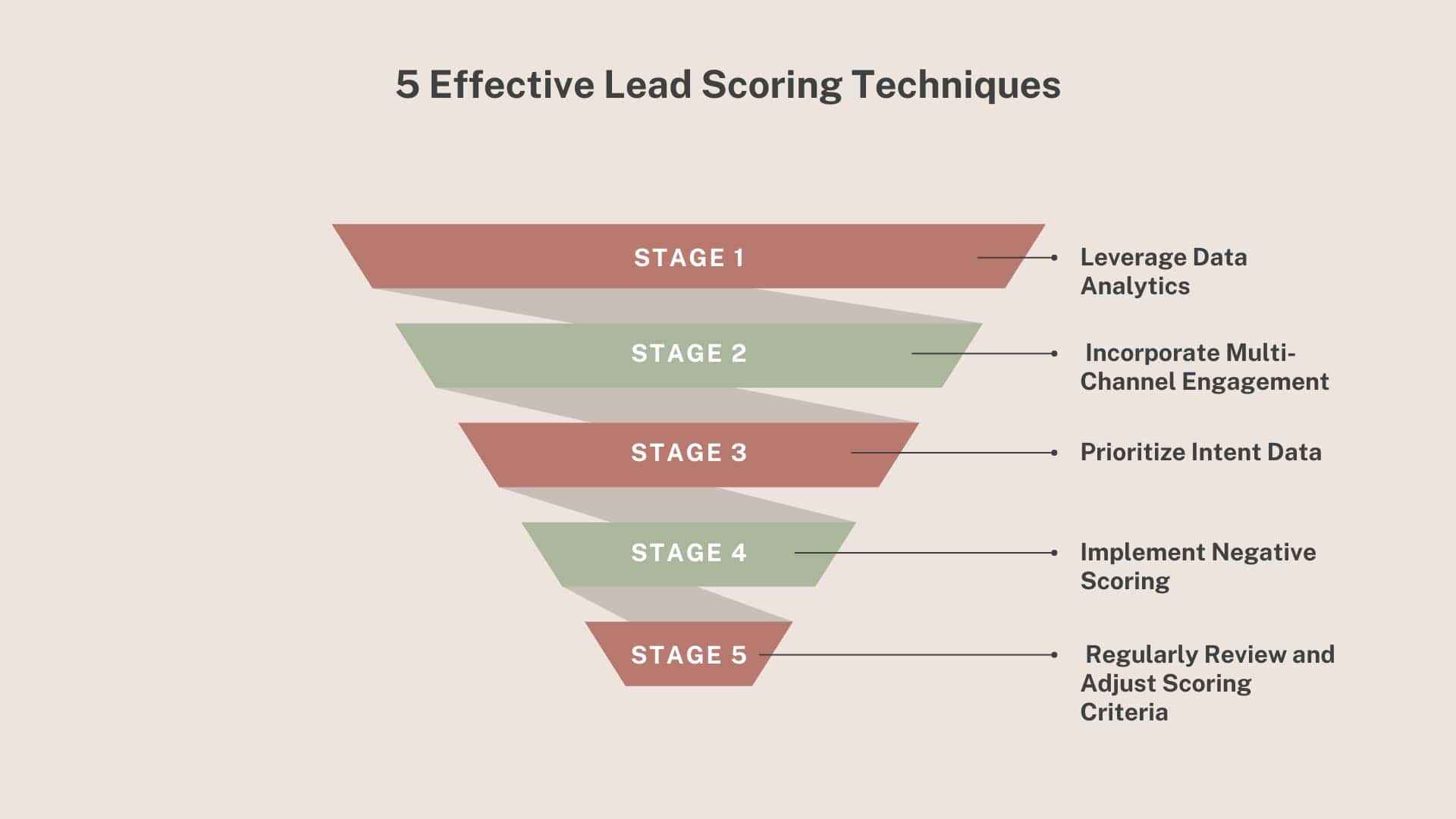
Using data analytics is one of the most powerful lead scoring techniques available today. By analyzing historical data, you can identify patterns that indicate which leads are most likely to convert.
Tip – Invest in analytics tools that can help you automate data collection and analysis for more accurate lead scoring.
Today’s leads interact with businesses across various channels, from email and social media to website visits. Integrating multi-channel engagement into your scoring model provides a holistic perspective on lead activity.
Tip – Use a CRM system that integrates data from multiple channels to create a holistic view of lead interactions.
Intent data can provide invaluable insights into the interests and needs of your leads. By understanding their intent, you can adjust your scoring accordingly.
Tip – Regularly update your scoring criteria based on the latest intent signals to ensure you’re capturing genuine interest effectively.
Not all interactions are positive, and negative scoring is a technique that helps you identify leads that may not be worth pursuing.
Tip – Regularly review your negative scoring criteria to ensure they align with your business goals and lead behavior trends.
Lead scoring is not a one-time effort; it requires ongoing evaluation and adjustments. Regularly reviewing your scoring criteria ensures that your lead scoring techniques remain effective and relevant.
Tip – Schedule regular check-ins with your team to review scoring performance and make necessary adjustments.
As you embark on your lead scoring journey, remember that the ultimate goal is to enhance your engagement efforts and improve your conversion rates.
By adopting the strategies outlined in this blog and regularly monitoring their effectiveness, you can create a robust lead scoring strategy that propels your business to new heights.
Implementing these practices not only helps you identify high-quality leads but also fosters a deeper understanding of your customers’ needs and preferences.
So, take the time to develop a thoughtful lead scoring model tailored to your unique business objectives, and watch as it transforms your sales process into a more efficient and successful endeavor.

100% Lead Capture, 75% More Efficiency, 2X Engagement!
Book a free demo and see how you can close more deals, faster!


95% business who use NeoDove report 3x more profits!
Happy Customers
107k reviews


Book a free demo and see how you can close more deals, faster!

![]()
95% business who use NeoDove report 3x more profits!
Happy Customers
107k reviews

These outcomes and beyond can be yours.
Lead Leakage
Increase in call attempts
More Engagement