
























Join our WhatsApp Channel for the latest updates.
Table of Contents
ToggleIn recent years, digital communication has surged, and many companies now offer self-service options to their customers. While these methods are popular, nothing beats the personal touch of phone call support for delivering a truly customized customer experience.
It is where call centers come in. Call centers are a cost-effective way to boost sales for products and services. In today’s blog, we’ll explore how to start a call center business and leverage its benefits for your company.
Disorganized communication leads to slow response times and inconsistent customer service. A well-organized call center setup centralizes communication channels, ensuring customers receive prompt, consistent, and professional responses.
This boosts customer satisfaction and loyalty. Even with a small call center setup, fewer agents can efficiently manage interactions, delivering personalized service without sacrificing quality.
Rapid business growth and high call volumes overwhelm staff and lead to long wait times.
Setting up a well-structured call center helps manage and route calls efficiently, reducing wait times and preventing staff overload.
Advanced features like automated call distribution and interactive voice response systems ensure calls reach the right department or agent, improving overall operational efficiency.
Having a call center setup helps simplify and improve different business processes. With dedicated agents handling customer interactions, your core team can focus on strategic tasks, product development, and other essential activities.
Additionally, call centers often come with integrated CRM systems that provide valuable insights into customer interactions, enabling better decision-making and strategic planning.
One significant advantage of a call center setup is its scalability. As your business grows, you can quickly expand your call center operations without significant disruptions.
Small call center setups are particularly advantageous for businesses in their growth phase, allowing them to scale operations and resources according to demand. This flexibility ensures that you are prepared to handle future growth effectively.
By consolidating customer service operations, you can reduce operational costs associated with fragmented communication channels.
For small businesses, a well-planned call center setup can offer a balance between cost and functionality, providing essential features without the need for large-scale investment.
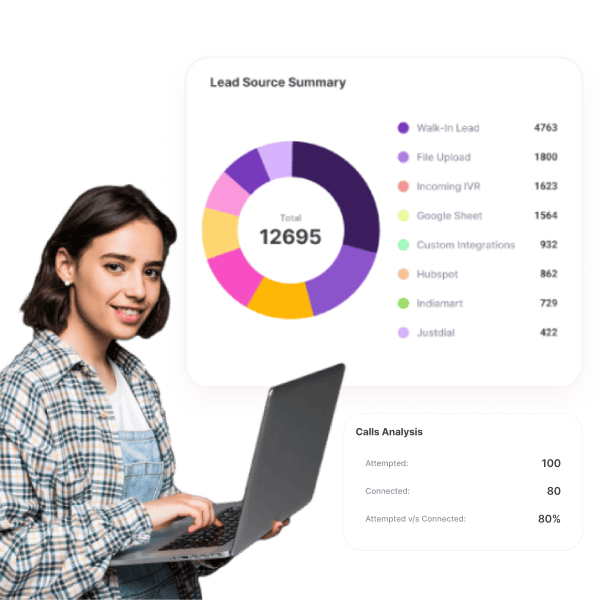
A Call center offers you robust data management as well as reporting capabilities. By tracking key performance indicators, such as lead conversions, average call time, follow-ups, agent attendance, etc. you can get better insights into your business operations.
This data helps identify trends, measure performance, and make informed decisions to improve service quality and operational efficiency.
Here is a detailed call center setup guide for startups and small businesses:
What specific goals do you aim to achieve?
Before starting the setup of your call center, it’s essential to clearly define its objectives.
These goals could be improving customer support, increasing sales, or handling inbound and outbound communications.
Clearly outlining your objectives will guide your decisions on infrastructure, technology, and staffing needs.
Tip – Note that a call center differs from a contact center in that it focuses solely on providing services or solutions over the phone.
Next you would be required to make a proper budget for setting up your call center business. To calculate an estimate for call center business, consider the following:
Establishing a realistic budget ensures you can manage your resources effectively and avoid unexpected expenses.
Tip – When deciding on a call center budget, consider technology, facility size, and team headcount.
Once your business plan and budget are finalized, the next step to setting up a call center is to complete the required paperwork. Make a list of all the required documents such as GST certificates, licenses, etc.
Also, get legal advice from advocates on how to comply with rules and regulations related to call center business.
Tip – These formalities are essential to ensure your business operates legally and smoothly in India.
Is your goal to proactively reach out to potential customers and offer your products or services, or do you want to focus on addressing customer queries and providing support?
If your primary objective is sales and outreach, an outbound call center is what you need. Outbound centers are designed for making outgoing calls, whether to generate leads, sell products, or schedule appointments.
On the other hand, if your focus is on customer service—resolving issues, answering questions, or offering support—then an inbound call center is the best fit.
A blended call center is worth considering for businesses that need both services. These call centers manage outbound and inbound calls, offering a flexible solution that helps you reach customers while providing top-notch support when required.
Tip – When determining the type of call center, consider the location as well — whether you need a physical office or your agents will work remotely.
The next step in setting up a call center is selecting your software providers. There are different types of call center software providers like: On-premises, Hosted, and Cloud-based.
On-premises call center software offers the tools and infrastructure needed to manage and operate everything internally. It means all equipment, servers, and software are located on-site, giving you complete control but also requiring significant upfront investment and ongoing maintenance.
On the other hand, hosted or cloud-based call center software takes care of everything for you. With cloud-based solutions, there’s no need for physical servers or hardware, as everything is managed remotely. This option lets you focus on running your business while your provider handles the technical aspects.
Tip – While on-premises solutions offer control, they come with high costs for purchasing, installing, and maintaining hardware and software. In contrast, cloud-based call center software solutions are far more flexible, scalable, and budget-friendly, making them ideal for businesses seeking efficiency and growth.
Before you choose any call center software solutions, you need to consider these features:
Tip – Based on whether you are starting an inbound or outbound call center, look for the features in your call center software.
The next step in starting a call center business is determining the number of telecallers you need. This is also a very important step and requires careful thinking and planning since being understaffed can result in long wait times for callers, whereas too many telecallers can result in more overhead costs.
To determine how many telecallers you need, consider factors like call volume, call handle time, average wait time, and average missed calls.
Tip – Set the roles and responsibilities for your call center agent, supervisor, and manager.
Hiring a call center team is critical, and careful consideration is needed when selecting your staff. Since they will interact with customers in real time, they must have the proper skill set.
Look for team members with excellent communication skills, high emotional intelligence, and a strong sense of empathy. They should be proficient in problem-solving, objection handling, and multi-tasking and able to manage stress effectively.
These qualities ensure they can handle customer interactions smoothly and deliver a positive experience, even in high-pressure situations.
Tip – Utilize job portals or platforms to identify qualified candidates for the tele-calling role.
The next step after the hiring process is onboarding and training. Creating an efficient onboarding process is crucial for providing a positive experience for your employees.
Comprehensive training is also essential to improve agent efficiency and engagement and reduce turnover rate. Here are some tips for making your onboarding & training process smooth:
Tip – Give proper training and pass on product knowledge to hired telecallers to ensure better performance and handling of customer queries.
Setting up a call center is just the beginning. It’s equally important to stay informed and ensure your team is well-educated on the legal and regulatory compliance requirements for BPO and call center operations.
Following these regulations ensures that your business maintains ethical practices and meets industry standards. Ignoring them can lead to fines, penalties, damage to your reputation, and loss of customers.
Here are some key call center or BPO compliance regulations to observe:
Tip – When setting up a call center business, make sure it follows standard rules and regulations to avoid any penalties or fines.
In conclusion, starting a call center business offers significant advantages for companies seeking to enhance customer support, increase sales, and streamline operations.
By using this detailed call center setup guide, you can effectively create a call center that aligns with your business goals.
From defining clear goals and creating a budget to selecting the right software and building a skilled team, each step plays a crucial role in ensuring your call center runs smoothly.
With the proper planning and execution, your call center will improve customer satisfaction and drive long-term business success.

100% Lead Capture, 75% More Efficiency, 2X Engagement!
Book a free demo and see how you can close more deals, faster!


95% business who use NeoDove report 3x more profits!
Happy Customers
107k reviews


Book a free demo and see how you can close more deals, faster!

![]()
95% business who use NeoDove report 3x more profits!
Happy Customers
107k reviews

These outcomes and beyond can be yours.
Lead Leakage
Increase in call attempts
More Engagement