





















Join our WhatsApp Channel for the latest updates.
Table of Contents
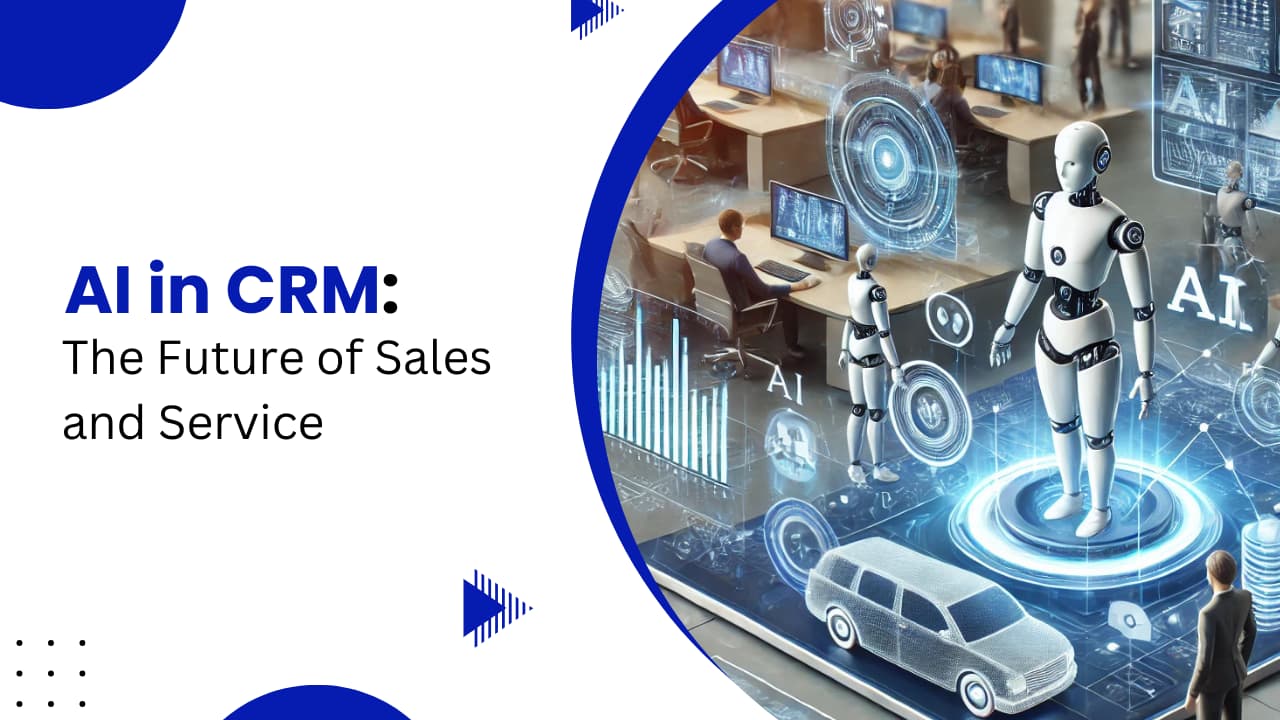
ToggleArtificial intelligence and automation are transforming Customer Relationship Management (CRM) systems into a powerful tool that not only streamline operations but also enhance the customer experience. The use of AI in CRM is becoming more prevalent, marking a significant shift in how businesses approach sales and customer service.
Before diving into automation, it’s essential to understand why CRM adoption is so critical. Many companies invest in CRM tools but struggle to get their teams on board, leading to several key challenges:
AI is highly effective at analyzing large volumes of customer data, uncovering hidden trends and preferences that might be missed through manual analysis. By leveraging machine learning algorithms, it can identify patterns in customer behavior, allowing busin esses to tailor their offerings and marketing strategies accordingly.
Tip – Use AI-driven CRM tools to analyze customer behaviors for more targeted marketing.
AI facilitates hyper-personalized communication by analyzing individual customer profiles and preferences, allowing businesses to deliver tailored product recommendations and support.
By leveraging data from previous interactions, purchase history, and browsing behavior, AI can craft customized messages that resonate with each customer.
Tip – Automate personalized follow-ups and recommendations to increase customer satisfaction and loyalty.
AI leverages historical data and sophisticated algorithms to predict customer behaviors, allowing sales teams to effectively anticipate future needs and purchasing patterns.
This proactive approach allows businesses to tailor their offerings, ensuring they meet customer demands before they arise.
Tip – Use predictive analytics to focus on high-value leads and improve sales forecasting accuracy.
AI streamlines and automates repetitive tasks such as data entry, scheduling appointments, and sending follow-up reminders, allowing sales teams to allocate their time more efficiently.
By handling these routine tasks, AI allows sales professionals to focus on high-value activities, such as fostering relationships and finalizing deals.
Tip – Automate low-value tasks to allow your team to spend more time on strategic activities.
AI analyzes lead data and assigns scores to prioritize prospects based on their likelihood to convert. By examining a range of factors—including engagement levels, demographic data, and previous interactions—AI pinpoints high-potential leads that require prompt attention.
Tip – Implement AI-driven lead scoring to ensure your team focuses on the most promising leads.
The AI-powered systems can manage high volumes of inquiries, resolving common issues quickly without the need for human intervention. By personalizing responses and continuously learning from interactions, they enhance customer satisfaction.
Tip – Incorporate AI chatbots to handle basic customer service queries, enhancing efficiency and customer satisfaction.
AI leverages historical data to deliver precise sales forecasts, empowering businesses to make smarter decisions regarding inventory, staffing, and marketing strategies.
Tip – Utilize AI-driven forecasting to reduce uncertainty and create a more targeted, efficient sales strategy.
AI predicts when a customer might be at risk of churning, enabling businesses to take proactive steps to retain them.
Tip – Use AI to monitor customer health and implement retention strategies before losing valuable clients.
AI optimizes communication across multiple channels (email, SMS, social media), ensuring customers receive consistent messaging wherever they interact with your business.
Tip – Utilize AI to seamlessly coordinate multi-channel communication and improve customer engagement.
AI integrates with existing CRM systems to enhance their capabilities, providing advanced features like real-time analytics, workflow automation, and AI-powered insights.
Tip – Ensure your CRM system is AI-enabled to unlock deeper insights and automation opportunities.
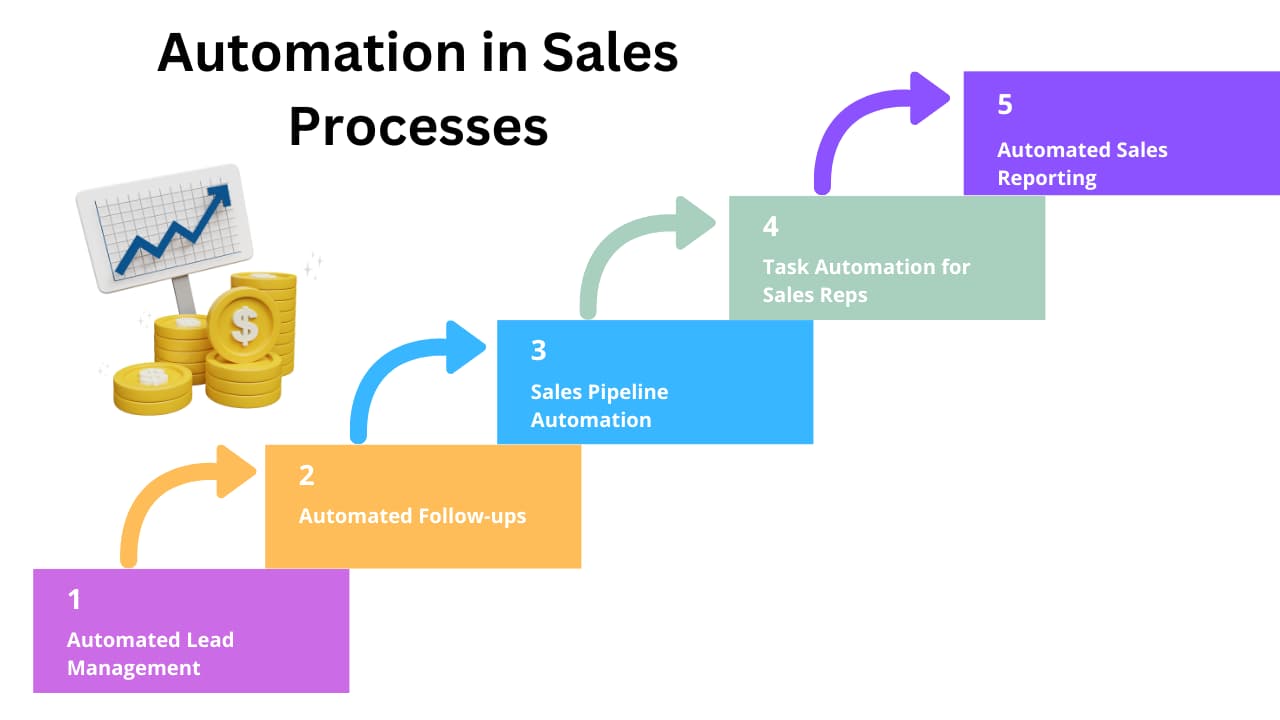
Automation in sales processes has transformed the way businesses operate, enhancing productivity, efficiency, and customer satisfaction. Here’s a deeper look into how automation can revolutionize sales operations, with key pointers and actionable tips.
AI automates the entire lead management process, from capturing and nurturing to tracking prospects, ensuring that no potential customer slips through the cracks. By efficiently collecting lead information from various sources, AI systems can organize and segment leads based on specific criteria, such as interests and behaviors.
Tip – Use automation to assign leads to the right sales reps based on criteria like geography or product interest.
Sales automation tools streamline the follow-up process by automatically sending timely emails or messages, eliminating the need for manual intervention. This ensures that prospects remain engaged throughout their buyer journey, receiving relevant information and reminders when they need it most.
Automated follow-ups not only enhance the customer experience but also increase the likelihood of conversions, making it a crucial component of an effective sales strategy.
Tip – Automate follow-up reminders and emails to maintain consistent communication with leads and increase chances of conversion.
Sales pipeline automation streamlines the progression of deals through different sales stages by automatically updating the CRM and alerting representatives when specific actions are required.
his ensures that no opportunity is overlooked, as sales reps receive timely reminders to follow up or take necessary steps
Tip – Set up automated pipeline notifications to keep sales reps informed about deal progress and next steps.
Task automation for sales reps eliminates the burden of repetitive activities such as scheduling meetings, data entry, and generating reports, allowing teams to redirect their focus toward more strategic initiatives.
This not only boosts overall productivity but also enhances job satisfaction, as reps spend less time on administrative work and more on activities that drive revenue.
Tip – Automate routine tasks like meeting scheduling and call logs to allow reps to spend more time selling.
Automated sales reporting streamlines the process of gathering and analyzing sales data, removing the need for manual report generation. By using CRM tools equipped with automation, businesses can generate detailed reports on sales performance, team efficiency, and customer behavior in real-time.
Tip – Use automated reporting to gain insights into sales performance and make data-driven decisions for improvement.
The future of sales with AI is promising, as AI continues to enhance CRM functionalities in ways that were previously unimaginable. AI-driven CRM tools can analyze data from various customer touchpoints—such as social media, email, and phone interactions—to generate actionable insights.
Sales teams can use these insights to create more targeted marketing campaigns, personalize sales pitches, and close deals faster.
Furthermore, CRM solutions with AI help sales teams prioritize their tasks by identifying high-value leads, suggesting the best next steps, and automating follow-ups. This level of intelligence allows businesses to scale their operations while maintaining a personalized approach to customer interactions.
While the benefits of AI in CRM are clear, businesses must also be aware of the challenges associated with AI implementation.
One major concern is data security. AI systems require access to vast amounts of customer data, which increases the risk of data breaches if not properly secured. Businesses must ensure that they implement robust security measures to protect sensitive information.
Another important factor to consider is how AI tools integrate with current CRM systems. Since not all businesses are prepared to manage the complexities of AI-driven tools, it’s essential to select CRM solutions with AI features that cater to their unique requirements.
The integration of AI in CRM is not just a trend—it’s the future of sales and customer service. By adopting AI-driven CRM tools and sales automation software, businesses can optimize their processes, improve customer engagement, and ultimately boost their bottom line.
Whether through AI-powered customer service or automation in sales processes, the benefits of embracing AI in CRM are clear. As AI continues to evolve, businesses that leverage these technologies will be better positioned to meet the growing demands of their customers and stay ahead of the competition.
Embrace the future with AI and CRM automation, and take your sales and customer service strategies to the next level.

100% Lead Capture, 75% More Efficiency, 2X Engagement!
Book a free demo and see how you can close more deals, faster!


95% business who use NeoDove report 3x more profits!
Happy Customers
107k reviews


Book a free demo and see how you can close more deals, faster!

![]()
95% business who use NeoDove report 3x more profits!
Happy Customers
107k reviews

These outcomes and beyond can be yours.
Lead Leakage
Increase in call attempts
More Engagement