


















Join our WhatsApp Channel for the latest updates.
Table of Contents
ToggleKey Takeaways
If you are working in a call center, you might be aware that you will call hundreds of numbers daily and record thousands of details regarding your customers. To be honest, this is very crucial and can reveal the secret to your telecalling success.
But how do you use them? To understand this, you need to know what call center analytics is, which inbound or outbound call metrics you should be tracking, and how it can benefit your business.
So, if you wish to boost your success through data-driven decision-making, keep reading this blog until the end. I am sure you wouldn’t want to miss out on key details.
Call center analytics is the collecting and analyzing of key performance indicators (KPIs) or metrics of inbound and outbound calls that can be used to optimize operations.
Using a Customer Relationship Management (CRM) tool, one can quickly analyze data, identify opportunities, and build better strategies to improve customer relationships, boost revenue and increase efficiency.
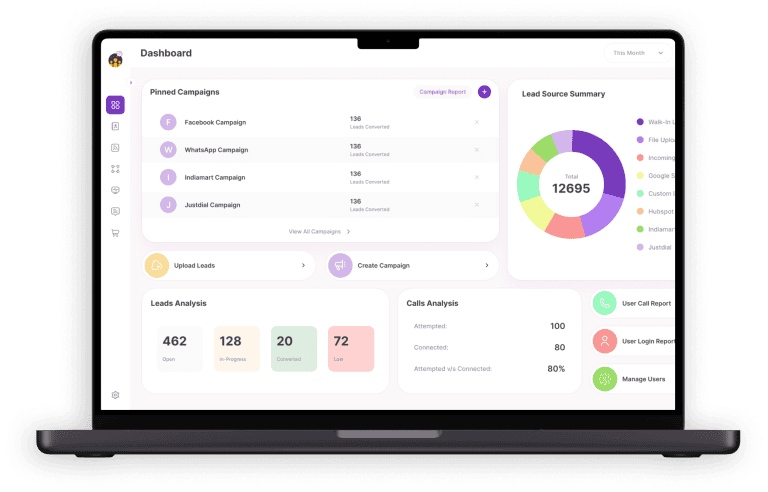
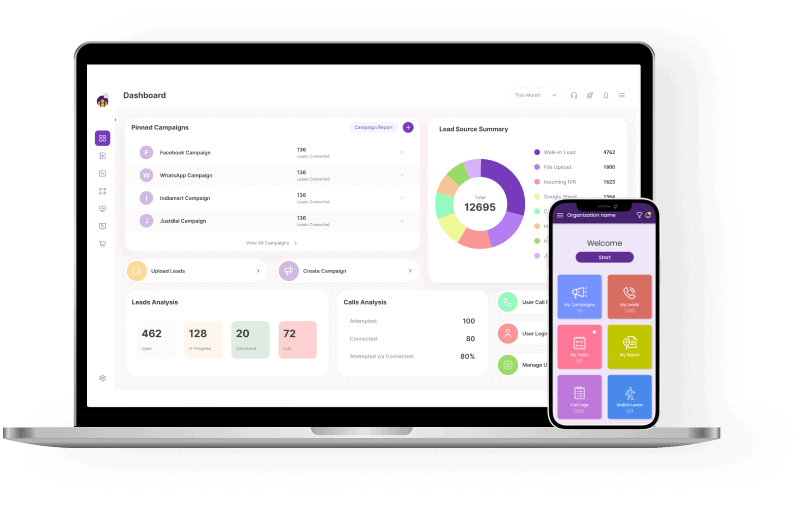
These days, call centers use advanced CRM tools that offer a comprehensive view of customer interactions, preferences, behavior, etc. These data are automatically converted into reports and analytics that can give deeper insights into a customer journey throughout the sales process.
When you get a customer’s call, how long do you take to receive the call or respond to them?
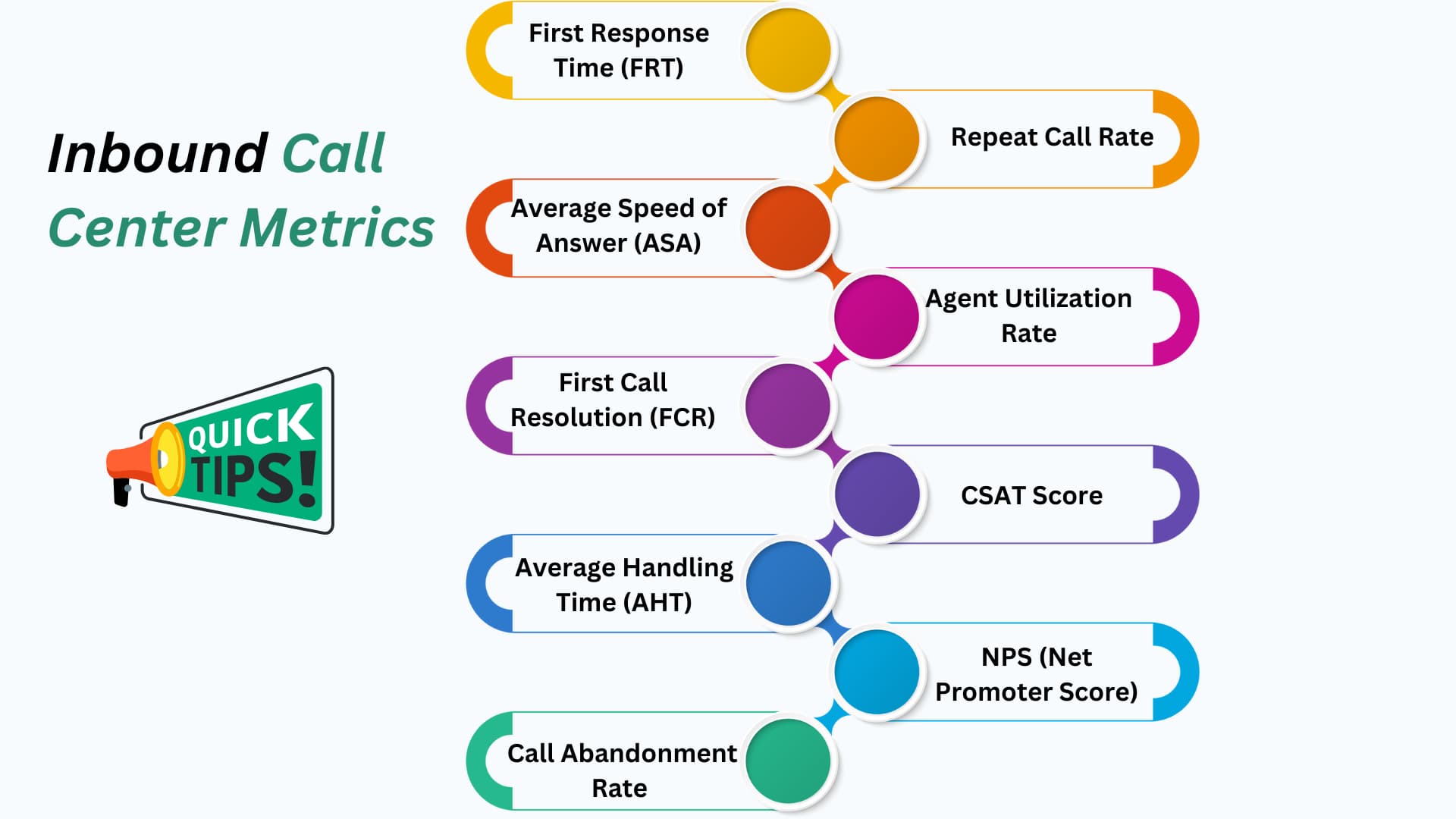
The first response time is the time taken to respond to or receive a customer’s chat or call.
This inbound call center analytics metric is vital because 70% of your customers will move to your competitors if your First Response Time is more than 15 seconds.
You don’t trust me? Competition is very high these days, and an “immediate” response means a lot to customers. This also reflects how much you prioritize your customers, so the first impression is the last.
Pro Tip – Track your inbound call analytics regularly to ensure your First Response Time is within 15 seconds for better customer retention.
This call center analytics metric gives you insight into how much time it takes for an agent to answer a call waiting once it is routed to them. The measurement involves dividing the entire time spent answering calls by the total number of calls that were answered.
Why does it matter? If the wait time exceeds one minute, your customers will abandon the call. No one likes to wait in the queue, you know it, right?
Pro Tip – Use inbound call tracking and analytics tools to monitor ASA and keep it below one minute to prevent call abandonment.
Can your agents resolve customer queries during their first call? This inbound call center analytics metric is essential when discussing customer experience. FCR reflects both your agents’ efficiency and the overall customer experience.
Pro Tip – Consistently tracking call center analytics for FCR helps improve customer satisfaction and reduces the need for repeat calls.
This inbound call center analytics metric measures the time an agent takes to handle a call from the initial contact to finishing the call. It includes talk time, call holding time, and after-call work (ACW).
It’s crucial to have shorter AHT to enhance customer experience and reduce customer support costs.
Pro Tip – Track AHT with inbound call tracking and analytics to streamline call handling and boost agent performance.
Next, we have the call abandonment rate, which measures the percentage of abandoned calls by callers. Sometimes, an agent will put a customer on hold while struggling to find a resolution. If the hold time exceeds 3-5 minutes, it can result in call abandonment by the customer.
Pro Tip – Regularly monitor your inbound call center analytics to reduce the call abandonment rate and ensure timely resolutions.
When a customer repeatedly calls for the same query, it not only degrades customer satisfaction but also reflects poor customer experience.
This is why tracking this inbound call analytics metric is crucial. The percentage of repeat calls made by the customer to get the resolution for the same issue is known as the repeat call rate.
Pro Tip – Analyzing repeat call rates with inbound call tracking and analytics can help identify service gaps and improve first-call resolutions.
Out of the total work hours, what percentage of time your agents spend handling customer calls is known as the agent utilization rate. When the agent utilization rate is low, it means that the agent is not being productive and efficient.
Pro Tip – Regularly monitor your inbound call center analytics to optimize agent utilization and ensure your team is making the most of their work hours.
The Customer Satisfaction Score, or CSAT, gauges how happy consumers are with the services they get. High CSAT scores indicate intense customer satisfaction, increasing the likelihood of repeat business or future purchases.
Pro Tip – Use inbound call tracking and analytics to continuously monitor and improve CSAT scores, ensuring customer loyalty and positive brand perception.
Net Promoter Score (NPS) measures how likely customers are to recommend your services or products to others, reflecting their loyalty to your brand. A high NPS indicates strong customer loyalty, increasing the chances they will choose you over competitors.
Pro Tip – Leverage inbound call analytics to identify customer touchpoints and improve experiences, boosting your NPS and fostering long-term loyalty.
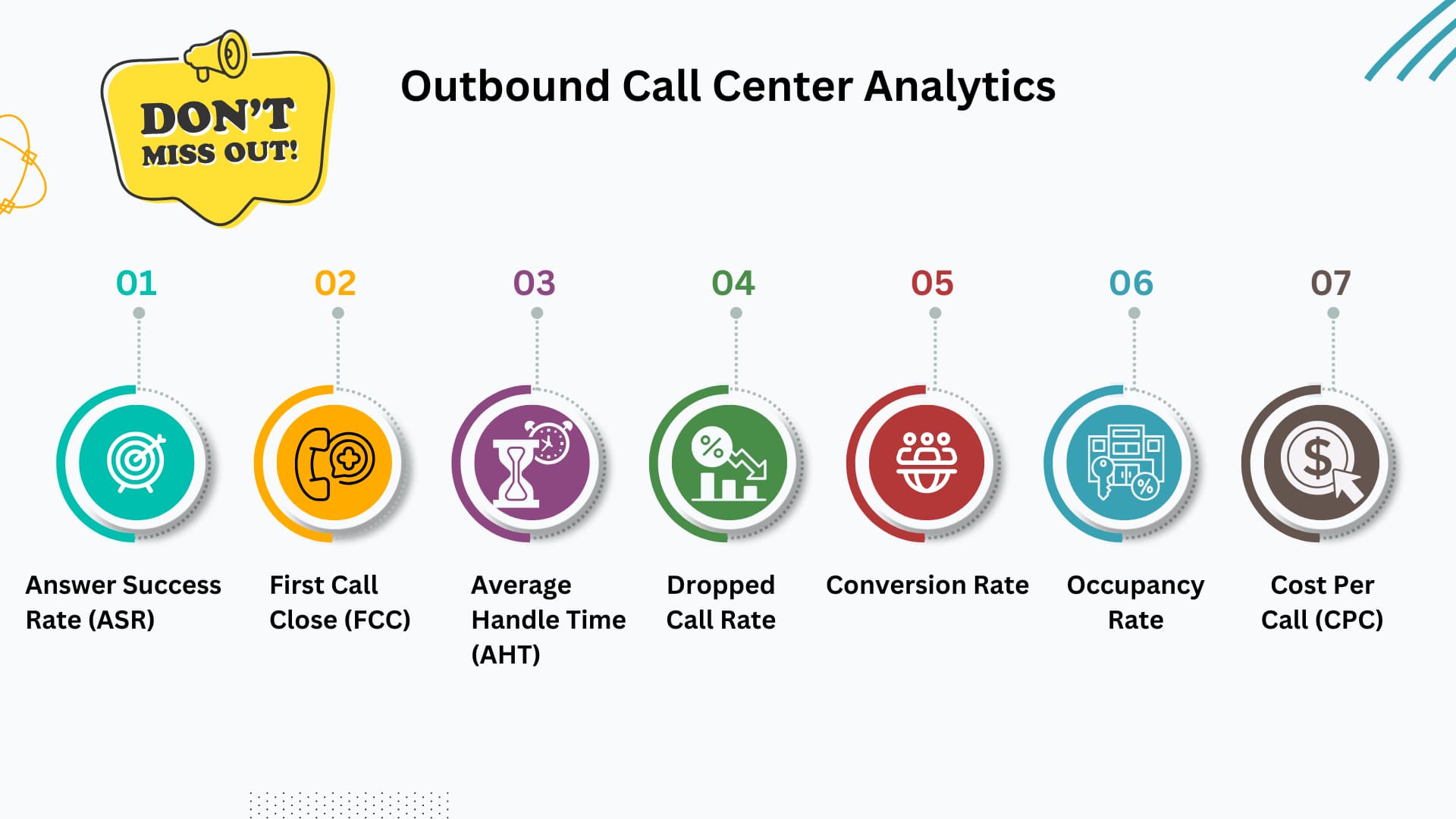
ASR, also referred to as call answer rate, is one of the most critical call center analytics. It represents the percentage of calls answered by leads or customers out of all the attempted outbound calls made by your agents within a given period.
Low ASR indicates that your contact list is poor or your calling strategy is inefficient.
Pro Tip – Optimize your contact list and outbound call center strategy to improve ASR and increase customer engagement.
FCC is an outbound call center metric that measures the percentage of calls resulting in a successful sale or conversion on the first call. A high FCC rate shows that your sales strategy and agents are highly efficient.
Pro Tip – Use outbound call center analytics to identify patterns in successful calls and refine your approach for higher FCC rates.
Similar to inbound calls, AHT is used in outbound call center analytics to track the average time taken by agents to handle a call from beginning to end. This includes hold time and after-call activities.
Pro Tip – Shorten AHT to improve both customer satisfaction and agent productivity in your outbound call center.
Dropped Call Rate, also known as call abandonment rate, is the percentage of calls dropped by the customer before connecting to an agent. A high call drop rate suggests inefficiency in your outbound call center, leading to wasted leads.
Pro Tip – Implement better strategies to reduce call abandonment and improve overall efficiency using call center analytics.
This outbound call center analytics metric represents the percentage of outbound calls that result in a purchase or sale. Tracking this metric helps you understand your sales agents’ performance and their effectiveness in converting leads into customers.
Pro Tip – Use outbound call tracking and analytics to monitor conversion rates and optimize your team’s performance.
This call center metric helps track the amount of time your agents spend handling a single call or after-call activities. A high occupancy rate means agents are efficiently using their time and generating more sales.
Pro Tip – Regularly analyze outbound call center analytics to ensure your agents maintain high occupancy rates for maximum productivity.
CPC measures the cost associated with making each outbound call. This includes all expenses like CRM subscriptions, internet charges, agent salaries, and operational costs.
Pro Tip – Leverage outbound call analytics to control CPC and streamline expenses, improving profitability in your outbound call center.
In 2024, leveraging call center analytics is not just an option but a necessity for optimizing both inbound and outbound operations.
By tracking key call center metrics such as First Response Time, Average Speed of Answer, and Conversion Rates, businesses can gain actionable insights to enhance customer experience, agent productivity, and overall efficiency.
Whether it’s reducing call abandonment rates or improving customer satisfaction scores, the right analytics can make all the difference in achieving business success.
Integrating these metrics into your daily operations can lead to data-driven decisions that improve performance and drive growth.To stay ahead of the competition, embrace the potential of call center analytics.
Call center analytics involves collecting and analyzing data from inbound and outbound calls to optimize operations and improve performance in areas such as customer experience and agent efficiency.
First Response Time measures how quickly agents respond to customer calls, impacting customer satisfaction. A faster response time typically leads to higher customer retention.
Inbound call metrics focus on customer service aspects, such as response times and resolution rates, while outbound metrics measure sales and marketing effectiveness, such as conversion rates and occupancy rates.
By tracking metrics like Average Handling Time and Occupancy Rate, managers can identify areas where agents may need additional training or process improvements to enhance productivity.
Most call centers use Customer Relationship Management (CRM) software with built-in analytics features that provide comprehensive insights into customer interactions, agent performance, and call outcomes.
By monitoring metrics like Average Speed of Answer and Call Abandonment Rate, businesses can make real-time adjustments to staffing and queue management, reducing wait times and abandoned calls.

100% Lead Capture, 75% More Efficiency, 2X Engagement!
Book a free demo and see how you can close more deals, faster!


95% business who use NeoDove report 3x more profits!
Happy Customers
107k reviews


Book a free demo and see how you can close more deals, faster!

![]()
95% business who use NeoDove report 3x more profits!
Happy Customers
107k reviews

These outcomes and beyond can be yours.
Lead Leakage
Increase in call attempts
More Engagement