


















Valid till
Hrs
Mins
Secs
Valid till
Hrs
Mins
Secs

Mastering High Ticket Sales: Strategies for Managing Long Sales Cycles

Key Takeaways

  • High-ticket sales is selling of costly products or services that usually demand a more thorough decision-making process from the buyer.
  • A long sales cycle is the period from the initial contact with a potential buyer until the final sale is completed. This cycle often includes multiple touchpoints, consultations, and negotiations. 
  • In high-ticket sales, employing effective sales techniques is vital for nurturing relationships and successfully closing deals. 

High-ticket sales can be incredibly rewarding, but they often come with long sales cycles that can test even the most seasoned sales professionals. 

High-ticket sales is selling of costly products or services that usually demand a more thorough decision-making process from the buyer.

Understanding what a long sales cycle entails is crucial for sales success in this arena. In this blog, we’ll explore effective strategies for managing long sales cycles to maximize your success in high-ticket sales.

What is a Long Sales Cycle?

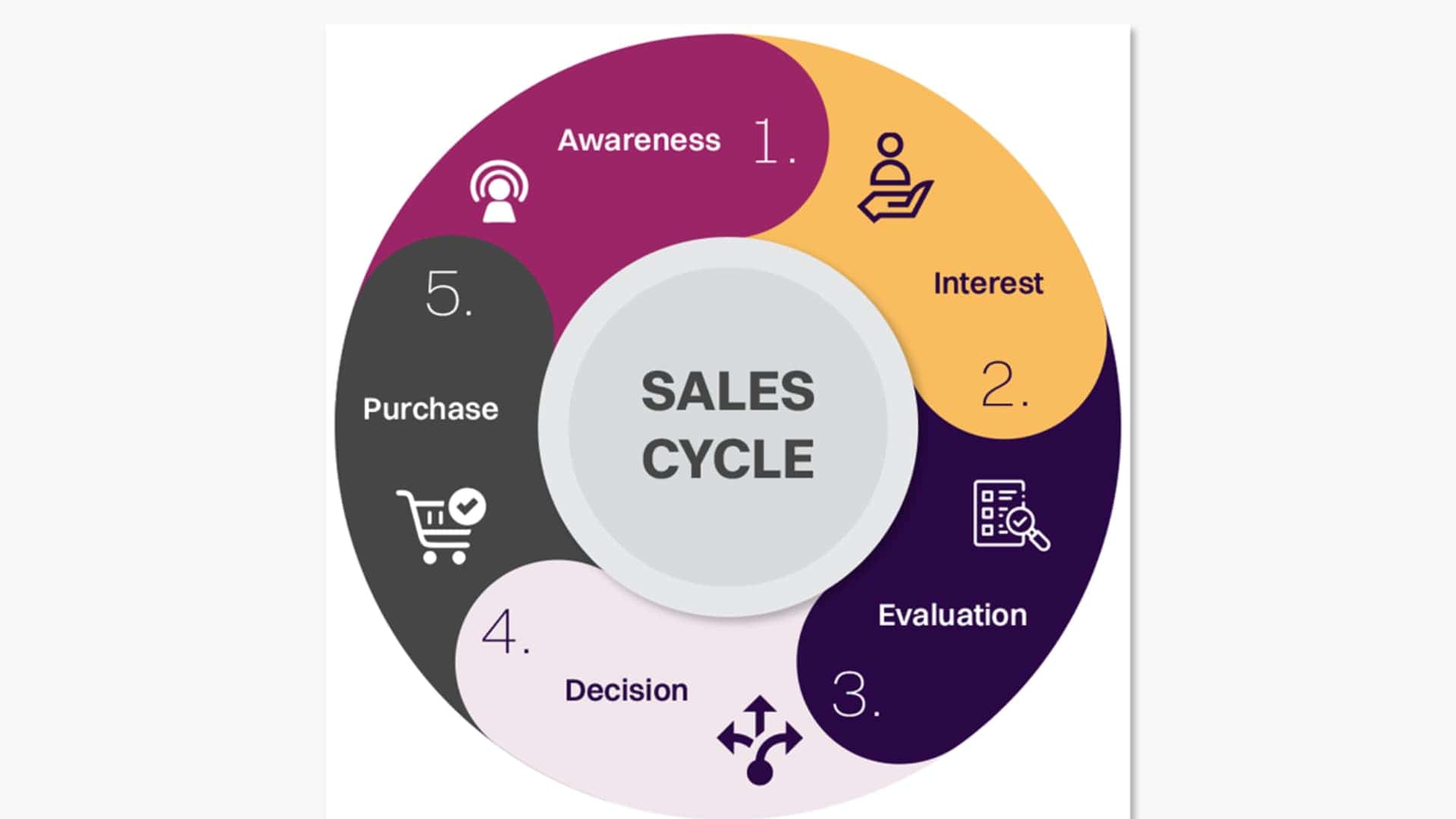
A long sales cycle is the period from the initial contact with a potential buyer until the final sale is completed. This cycle often includes multiple touchpoints, consultations, and negotiations. 

For high-ticket sales, this process can stretch over weeks or even months, depending on the complexity of the product and the buyer’s needs.

1) Long Selling Example

Consider a real estate agent selling luxury properties. The long selling example of a multi-million-dollar home illustrates how buyers often need to conduct thorough research, schedule multiple visits, and negotiate terms before making a decision. 

In these scenarios, maintaining engagement and providing valuable information is essential for moving the sale forward.

Tip – Use personalized follow-ups to keep potential buyers engaged during lengthy decision-making processes.

Strategies for High Ticket Sales

1) Build Relationships

Building solid connections with potential clients is essential in high-ticket sales. Make an effort to comprehend their needs, preferences, and challenges. This relationship-building will foster trust and can significantly shorten the sales cycle.

Tip – Use social media platforms to engage with potential clients and showcase your expertise.

2)Provide Value

Offering valuable insights and resources throughout the sales process demonstrates your commitment to helping clients make informed decisions. Consider hosting webinars or creating informative content related to your product.

Tip – Create a resource library that prospects can access at their convenience.

3) Follow Up Strategically

Following up with potential clients is crucial, but it should be done thoughtfully. Plan follow-ups at important stages in the sales process and make sure your communication is valuable instead of merely a check-in.

Tip – Use email automation tools to send personalized follow-ups based on client interactions.

4) Utilize Effective Selling Processes

Implementing an effective selling process can help streamline your approach to high-ticket sales. Break down the steps involved, from lead generation to closing, and ensure your team follows this framework.

Tip – Regularly review and refine your sales process to improve efficiency.

5) Leverage Testimonials and Case Studies

Showcasing past successes through testimonials and case studies can significantly impact a buyer’s perception of your product. High-ticket sales often hinge on trust, so providing social proof can accelerate the decision-making process.

Tip – Regularly update your testimonials to reflect recent success stories and evolving client needs.

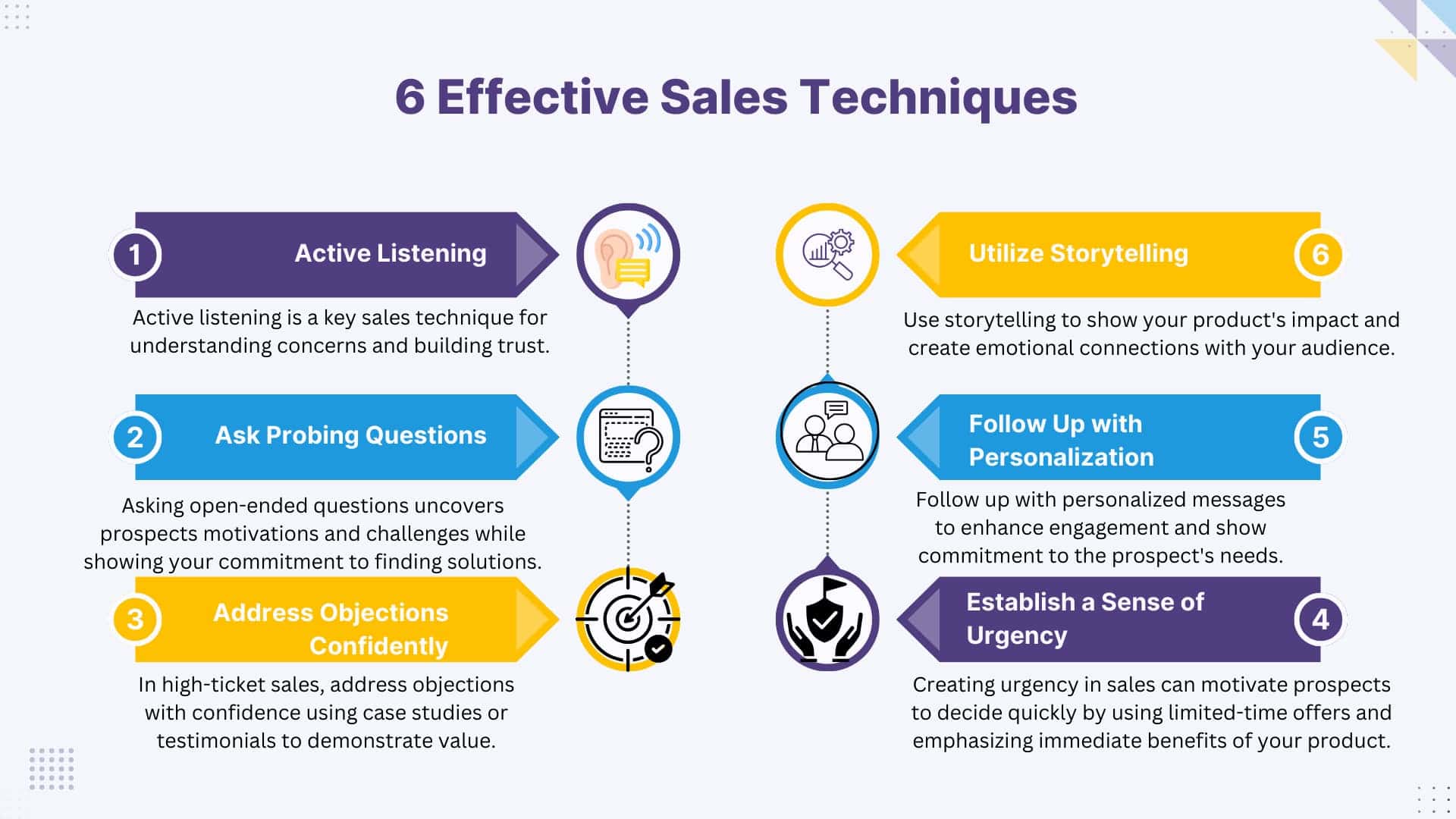
6 Effective Sales Techniques

In high-ticket sales, employing effective sales techniques is vital for nurturing relationships and successfully closing deals. Here are several strategies that can help you enhance your sales approach:

1) Active Listening

One of the most effective sales techniques is active listening. This means paying close attention to what your prospect is expressing, recognizing their concerns, and responding in a considerate manner.

By demonstrating that you genuinely care about their needs, you can build trust and rapport.

Tip – Practice reflective listening by summarizing what the prospect has said before responding.

2) Ask Probing Questions

Posing the right questions is crucial for revealing the core motivations and challenges of your prospects. Utilize open-ended questions that prompt them to elaborate on their needs and difficulties.

This not only helps you gather valuable information but also shows that you are invested in finding a solution for them.

Tip – Prepare a list of strategic questions tailored to your product or service to guide your conversations.

3) Address Objections Confidently

In high-ticket sales, prospects often have objections or concerns about making a significant investment. It’s essential to address these objections confidently and thoughtfully. 

Be prepared to provide evidence, such as case studies or testimonials, that demonstrate the value of your product and how it has resolved similar concerns for other clients.

Tip – Anticipate common objections and prepare responses ahead of time to ensure you’re ready to address them effectively.

4) Establish a Sense of Urgency

While maintaining integrity in your sales process, creating a sense of urgency can motivate prospects to make decisions more quickly. 

This can be achieved through limited-time offers, highlighting the benefits of acting sooner rather than later, or illustrating how your product can solve an immediate problem.

Tip –  Use phrases like “limited availability” or “special pricing for early adopters” to create urgency without being pushy.

5) Follow Up with Personalization

After your initial contact, follow up with personalized messages that reference previous conversations or specific interests expressed by the prospect. 

Personalization can significantly enhance engagement and demonstrate your commitment to their needs.

Tip – Use CRM tools to track interactions and schedule follow-ups based on your prospect’s timeline.

6) Utilize Storytelling

People are naturally drawn to stories. Use storytelling as a technique to illustrate how your product has made a difference in the lives of others. 

By sharing relatable anecdotes, you can create an emotional connection that resonates with your audience.

Tip – Craft a narrative around a successful client experience that showcases the transformation they achieved through your product.

Trusted by 40,000+ Users
Struggling to manage your leads? 🤔
Put an end to old-fashioned lead management and get started with smarter lead management today!
Blog - CTA l Request Demo l April 2024

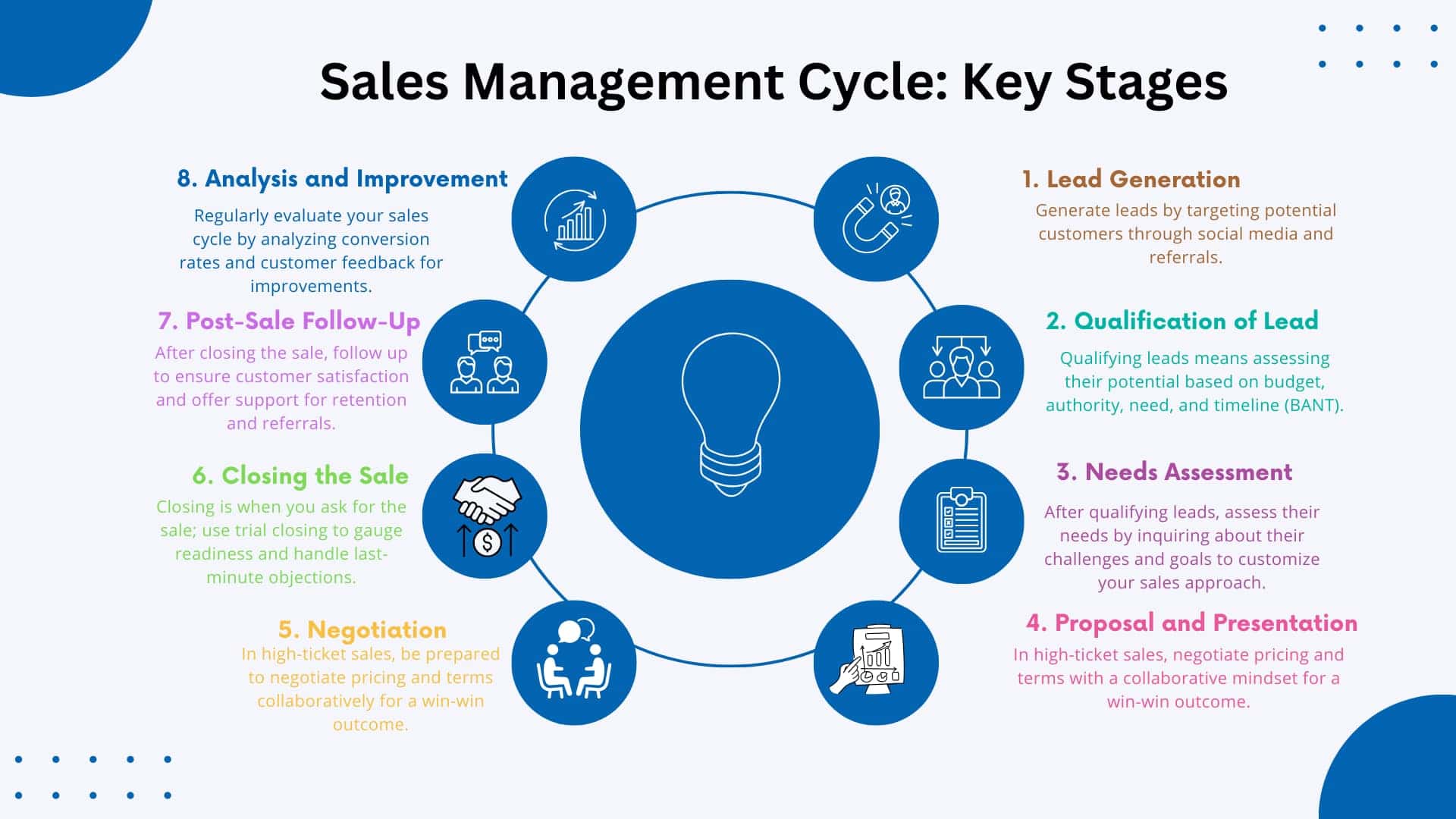
Sales Management Cycle: Key Stages

The sales management cycle is a systematic method that enables sales teams to efficiently oversee the complete sales process, from prospecting to closing and beyond.

1) Lead Generation

The first step in the sales management cycle is generating leads. This involves identifying potential customers through various channels such as social media, referrals, and networking. 

It’s essential to target leads that fit your ideal customer profile, particularly in high-ticket sales where each prospect is valuable.

Tip – Use targeted marketing campaigns to attract leads that align with your product’s ideal customer profile.

2) Qualification of Lead

Not all leads are equal. Qualifying leads involves assessing their potential based on factors like budget, authority, need, and timeline (often referred to as BANT).

Tip – Develop a lead scoring system to prioritize prospects based on their readiness to purchase.

3) Needs Assessment

Once leads are qualified, conduct a thorough needs assessment. This involves asking questions to understand their specific challenges, goals, and what they hope to achieve with your product. 

This information will guide your sales approach and tailor your offerings to meet their needs.

Tip – Use questionnaires or surveys to gather detailed information about prospects during initial conversations.

4) Proposal and Presentation

After understanding the prospect’s needs, create a customized proposal that highlights how your product can solve their problems. 

During the presentation, focus on the benefits and ROI rather than just the features. Use visual aids, demonstrations, or case studies to make a compelling case.

Tip – Use visuals like graphs or charts to illustrate potential results and make the proposal more engaging.

5) Negotiation

High-ticket sales often involve negotiation. Be prepared to discuss pricing, terms, and conditions. Approach this stage with a collaborative mindset, aiming for a win-win outcome that meets both your needs and those of the prospect.

Tip – Know your limits and be ready to offer alternatives or add-ons to sweeten the deal without compromising your value.

6) Closing the Sale

Closing is the critical moment where you ask for the sale. Use techniques such as trial closing, which involves gauging the prospect’s readiness to commit, or summarizing the benefits discussed. 

Be attentive to their signals and be ready to tackle any last-minute objections that may arise.

Tip – Create a closing checklist to ensure you cover all necessary points before asking for the sale.

7) Post-Sale Follow-Up

Once the sale is closed, don’t overlook the importance of following up. This stage is crucial for customer retention and referrals. Check in to ensure the customer is satisfied with their purchase and offer support as needed. 

Tip – Send personalized thank-you notes and ask for feedback to demonstrate that you value their business.

8) Analysis and Improvement

Lastly, consistently evaluate your sales management cycle to pinpoint opportunities for enhancement.

Collect data on conversion rates, average sales cycles, and customer feedback to refine your process continually.

Tip – Hold regular team meetings to review sales metrics and discuss strategies for improvement.

Take your telecalling team to the next level
Empower your telecallers with NeoDove, download our handy guide today!

    Blog - CTA l Telecalling Team l May 2024

    Conclusion

    Managing long sales cycles in high-ticket sales requires a strategic approach, patience, and effective relationship-building skills. 

    By understanding the nature of a long sales cycle, employing effective sales techniques, and leveraging tools to streamline the process, you can significantly improve your chances of closing sales for expensive products. 

    Ready to Transform Your Telecalling Operations?

    Request Demo l Case Study Page Form l December 2024

    By submitting this form, I give my consent to receive message/email/whatsapp and updates to my number or email address

    Tired of Wasting Time Dialing?

    Boost your telecalling efficiency with NeoDove’s Autodialer. Act now and discover what you’re missing out on!
    Request Demo l Exit Intent Pop Up Elementor l October 2024

    By submitting this form, I give my consent to receive message/email/whatsapp/calls and updates to my number or email address

    Call Smarter,
    Close Faster!

    100% Lead Capture, 75% More Efficiency, 2X Engagement!

    Call Smarter, Close Faster! Form

    By submitting this form, I give my consent to receive message/email/whatsapp and updates to my number or email address

    Still using Excel sheets Switch to NeoDove

    95% business who use NeoDove report 3x more profits!

    50,000 +

    Happy Customers

    4.8

    107k reviews

    Request Demo l new popup still l june 2024

    By submitting this form, I give my consent to receive message/email/whatsapp/calls and updates to my number or email address

    Are you Still using Excel sheets for Manual Telecalling?

    These outcomes and beyond can be yours.

    0%

    Lead Leakage

    200%

    Increase in call attempts

    3x

    More Engagement
      Request Demo

      By submitting this form, I give my consent to receive message/email/whatsapp and updates to my number or email address